How to Learn Languages on Netflix: Dual Subtitles & AI
Last Updated:
❓ How do I make Netflix subtitles exactly match the dubbed audio?
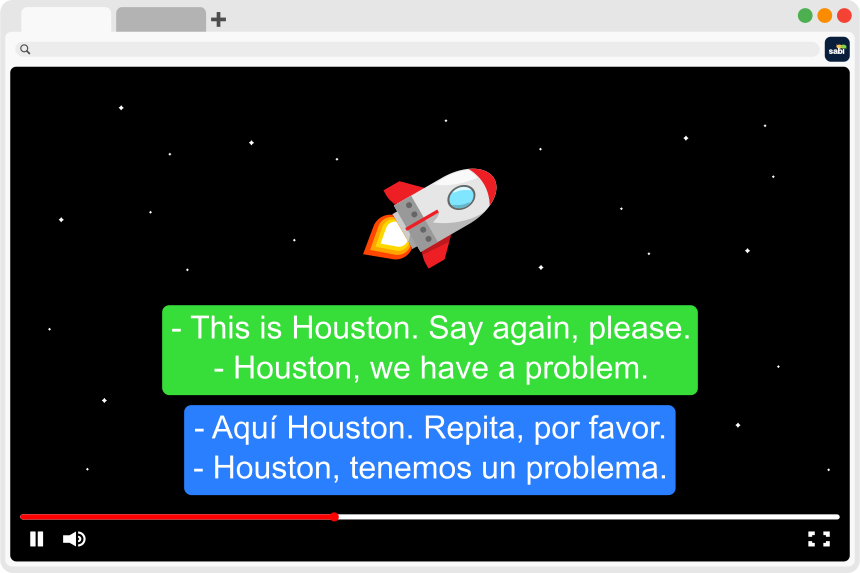
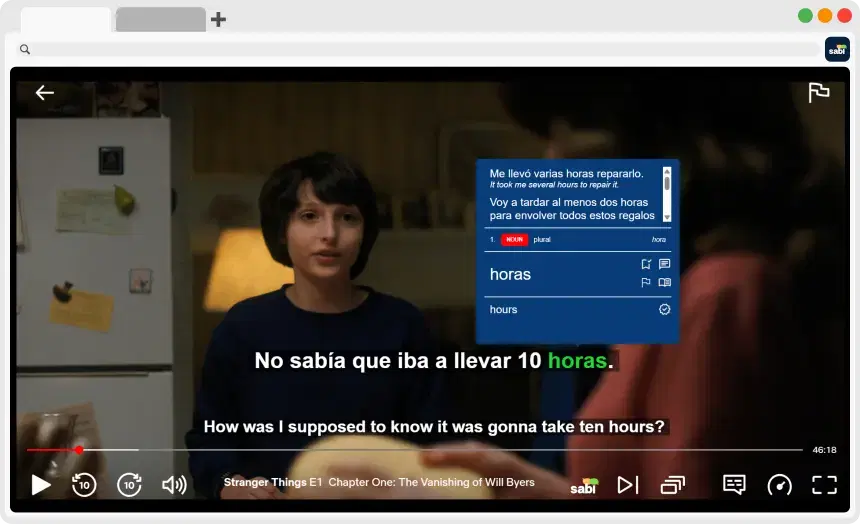
If you're watching a dubbed show, you'll often notice the subtitles don't match what the voice actors are saying. This is because standard subtitles are direct translations, while dubbing scripts are rewritten to match the actors' lip movements. This mismatch can make learning and shadowing very difficult. To fix this, you can use Sabi to generate AI subtitles based on the actual audio track, making your viewing experience smoother and more useful.
❓ Already using Language Reactor or Trancy?
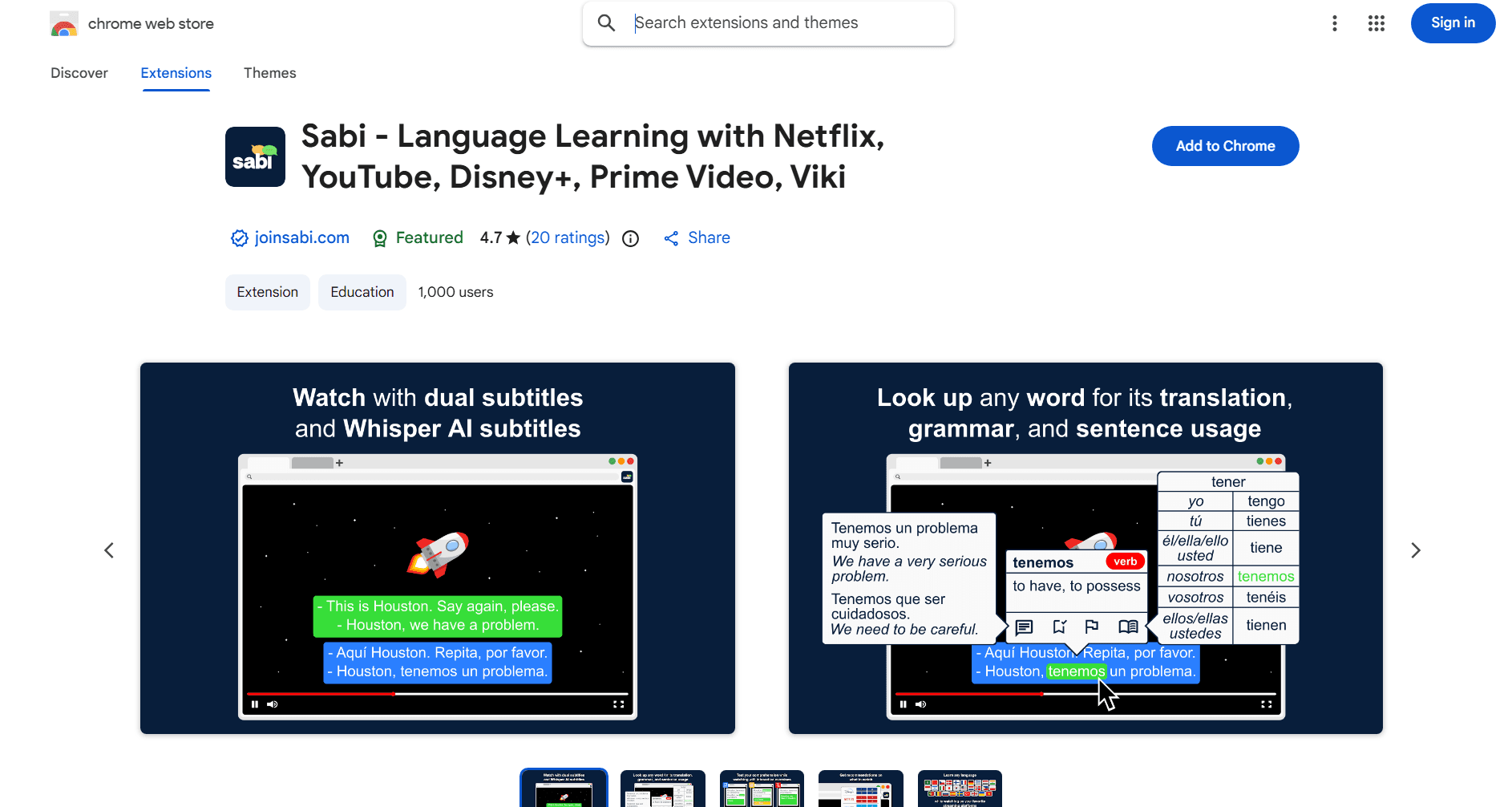
Many Netflix language extensions like Language Reactor or Trancy break frequently when Netflix updates its interface. Sabi is built with modern AI architecture to ensure your dual subtitles, hover-dictionary, and Whisper AI subtitles are always available. It also has an active development team behind it, pushing updates out frequently. And unlike Language Reactor, it isn't limited to Netflix and YouTube: it also works on Disney+, Prime Video and Viki.
🆚 Netflix on Its Own vs. Netflix With Sabi
Feature | Netflix alone | Netflix + Sabi |
|---|---|---|
Subtitles in your target language | ✅ | ✅ |
Two subtitle languages at once | ❌ | ✅ |
Subtitles that match the dubbed audio | ❌ | ✅ (AI subtitles) |
Instant word translations | ❌ | ✅ |
Auto-pause after each line | ❌ | ✅ |
Exercises on what you just watched | ❌ | ✅ |
Saved words to review later | ❌ | ✅ |
📺 How to Use Netflix + Sabi to Learn a Language
Sabi is a Chrome extension that enhances your language learning experience directly on Netflix. It turns regular viewing into a guided, interactive lesson while still being entertaining.
Here's how to get started:
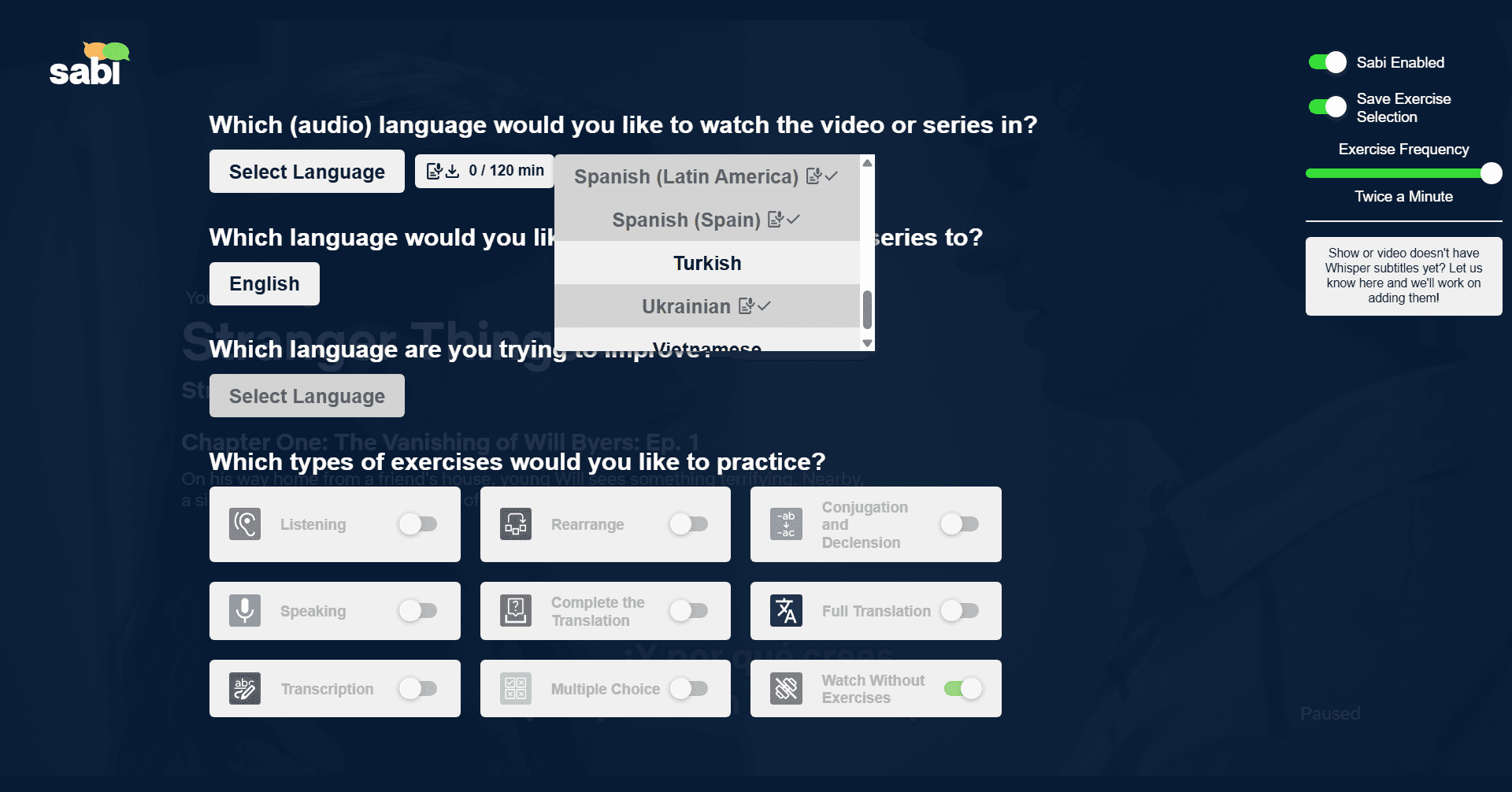
1. Install the Sabi Chrome Extension: Sabi integrates seamlessly with Netflix. Once it's installed, you'll see the Sabi screen while you watch.
2. Watch With Dual Subtitles: Sabi provides both native-language and English subtitles so you can follow along without getting lost. 👉 Try it for free
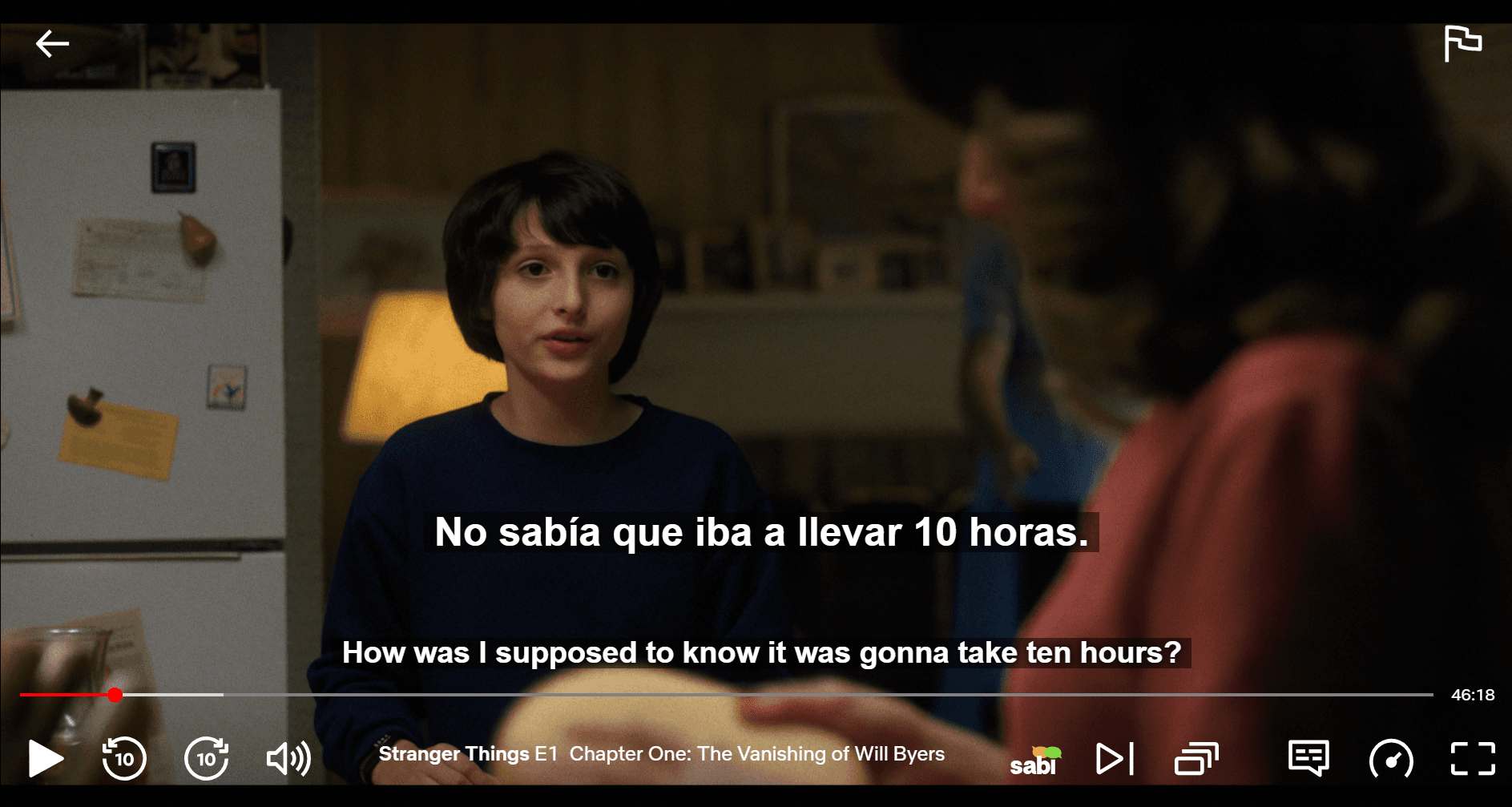
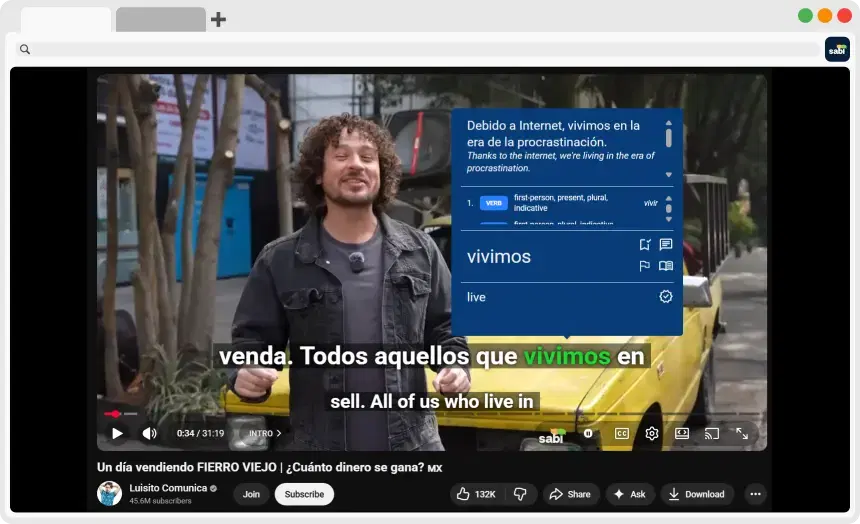
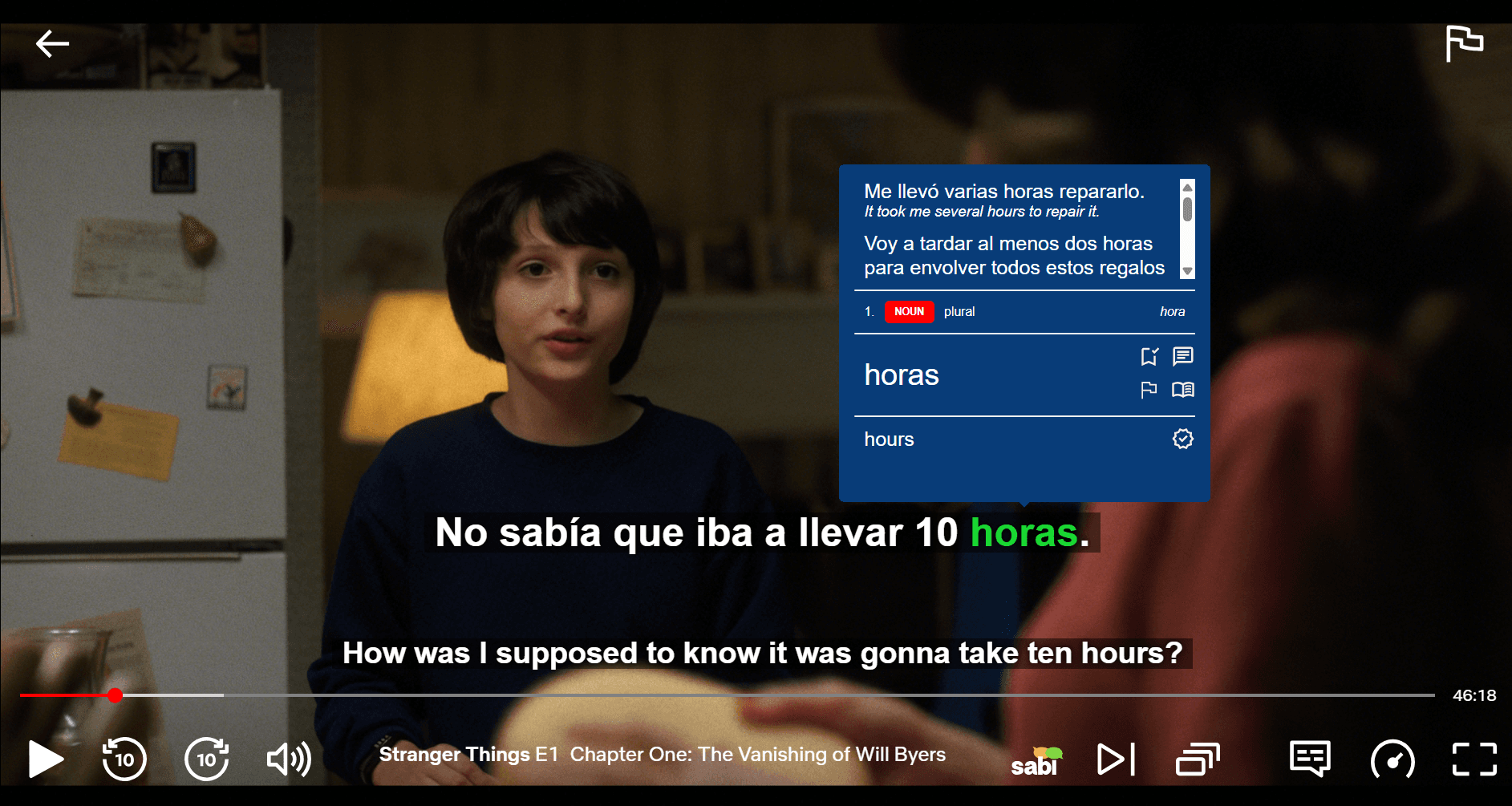
3. Hover Over Words to Learn Instantly: Curious about a word or phrase? Hover over it to see translations, example sentences, and pronunciations, all without needing to pause and look it up elsewhere.
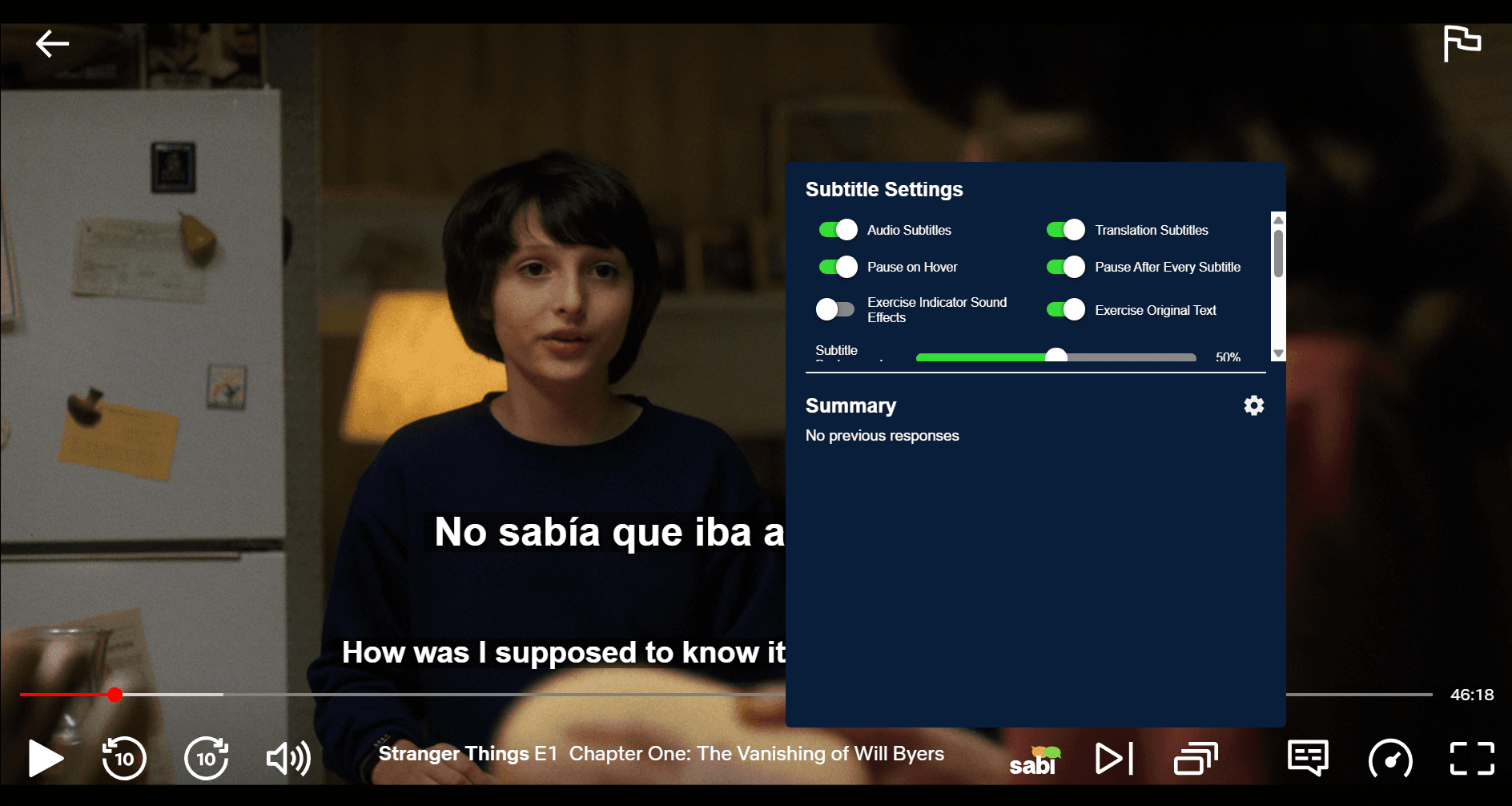
4. Use Auto-Pause for Deeper Understanding: Enable auto-pause so the video stops after each line of dialogue, giving you time to digest what you just heard and even repeat it out loud.
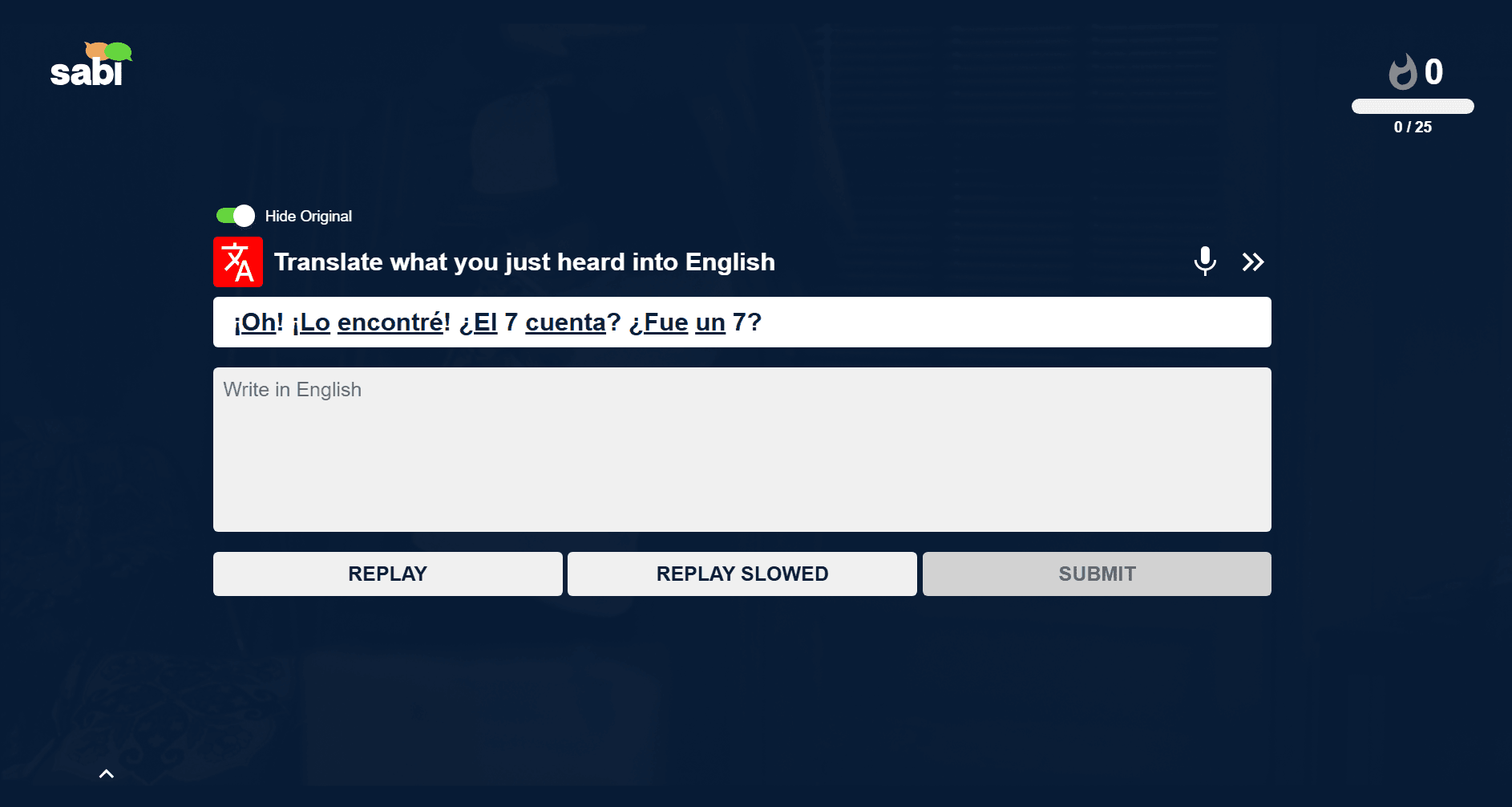
5. Practice With Interactive Exercises: While you're watching, Sabi tests you on what you heard to make sure you're actually understanding what's going on.
6. Whisper AI Subtitles: For videos without subtitles, Sabi can auto-generate accurate captions to make sure you can still follow along.
🌟 Pro Tips for Learning a Language with Netflix
— Choose shows with simple dialogue at first, like children's shows, romantic comedies, or sitcoms.
— Rewatch scenes to pick up missed details or reinforce grammar patterns.
— Speak along with the characters to improve pronunciation and rhythm.
— Use subtitles as a learning tool, and eventually try watching with only the target language subtitles or none at all.
— Focus on phrases rather than individual words.
— Dive deeper into the psychology of motivation and gamification with our guide on How to Gamify Language Learning.
— Check out alternative browser tools to see how Sabi stacks up in our full review of the Best Language Learning Chrome Extensions.
🎯 Why Netflix Is Perfect for Language Learning
Netflix's global content library includes shows and movies in dozens of languages, making it ideal for immersion-style learning. Watching native media exposes you to real-life expressions, grammar in context, and pronunciation you wouldn't easily find in textbooks.
Benefits of Learning with Netflix:
— Realistic dialogue: Learn how the language is actually spoken, not just how it's written.
— Visual context: Gestures, emotions, and scenes help reinforce meaning.
— Cultural exposure: Understand how language connects to traditions, humor, and social norms.
— Accessibility: Subtitles are available in both the original language and translations, helping you follow along.
🎬 Our Top Content Recommendations
For Learning Japanese 🇯🇵 : Start with Anime
Anime is ideal for learners because voice actors usually speak clearly and use standard grammar. However, genres matter, as a slice-of-life school drama is much easier than a sci-fi thriller. We’ve compiled a list of shows specifically ranked by difficulty, from beginner-friendly titles like Pokemon to advanced series.
👉 See our list of the Best Anime on Netflix for Learning Japanese
👉 Explore our full Japanese language learning guide
For Learning Korean 🇰🇷 : Dive into K-Dramas
Korean dramas are excellent for learning natural, conversational speech and cultural honorifics. Beginners should look for modern rom-coms which use everyday vocabulary, while avoiding historical dramas (Sageuk) that use archaic language.
👉 Check out the Best K-Dramas on Netflix for Learning Korean
👉 Explore our full Korean language learning guide
For Learning Spanish 🇪🇸 : Learn with Shows and Movies
It's best to start watching shows and movies that get you used to natural pacing. Beginners should start with light comedies and family-friendly series, before moving on to fast-paced dramas or dialect-heavy content.
👉 Check out the Best Movies and Shows on Netflix for Learning Spanish
👉 Explore our full Spanish language learning guide
❓ Frequently Asked Questions
Can you really learn a language just by watching Netflix?
Yes, but only if you combine watching with active techniques. Passive watching alone is slow, so be sure to actively engage with the content by looking up words you don't know and repeating aloud various phrases. Using tools like Sabi to add dual subtitles, vocabulary saving, and exercises will dramatically accelerate your progress and make the whole experience more enjoyable.
Can you have two subtitles on Netflix at the same time?
Not with Netflix alone: its player only shows one subtitle track at a time. A browser extension like Sabi adds dual subtitles, so you can see your target language and your native language together.
Should I watch with subtitles in my native language or my target language?
Start with both at once using dual subtitles, so you can follow the story while noticing how things are said. As you improve, switch to target-language subtitles only, and eventually try none at all. Our guide to learning with subtitles covers each stage.
What are the best Netflix shows for learning a language?
Shows with everyday dialogue work best for beginners: sitcoms, romantic comedies and children's shows. For language-specific picks, see our lists of the best anime for Japanese, K-dramas for Korean and shows for Spanish.
How long should I watch per day?
Even 20 to 30 minutes daily is powerful if done consistently. It's more important that you're paying attention and engaging with the video, rather than trying to reach a certain amount of time.
🚀 Final Thoughts
Netflix is already part of your life, so why not make it part of your language learning routine too? With the right mindset and the power of Sabi, you can turn every episode into a vocabulary builder, grammar guide, and pronunciation coach all in one. Whether you're just starting out or aiming for fluency, Sabi helps you stay immersed, engaged, and always learning.