How to Get Dual Subtitles on YouTube
Last Updated:
❓ How do I get better YouTube subtitles?
When watching a YouTube video, you'll often notice the subtitles don't match exactly what's being said. To fix this, you can use Sabi to generate AI subtitles using OpenAI Whisper, making your viewing experience smoother and more useful.
🚀 How to Use Sabi with YouTube to Learn a Language
Sabi is a Chrome extension that helps you learn a language while watching directly on YouTube. It turns any video into a guided and interactive lesson while still being entertaining.
Here's how to get started:
1. Install the Sabi Chrome Extension: Sabi integrates seamlessly with YouTube. Once it's installed, you'll see the Sabi screen while you watch.
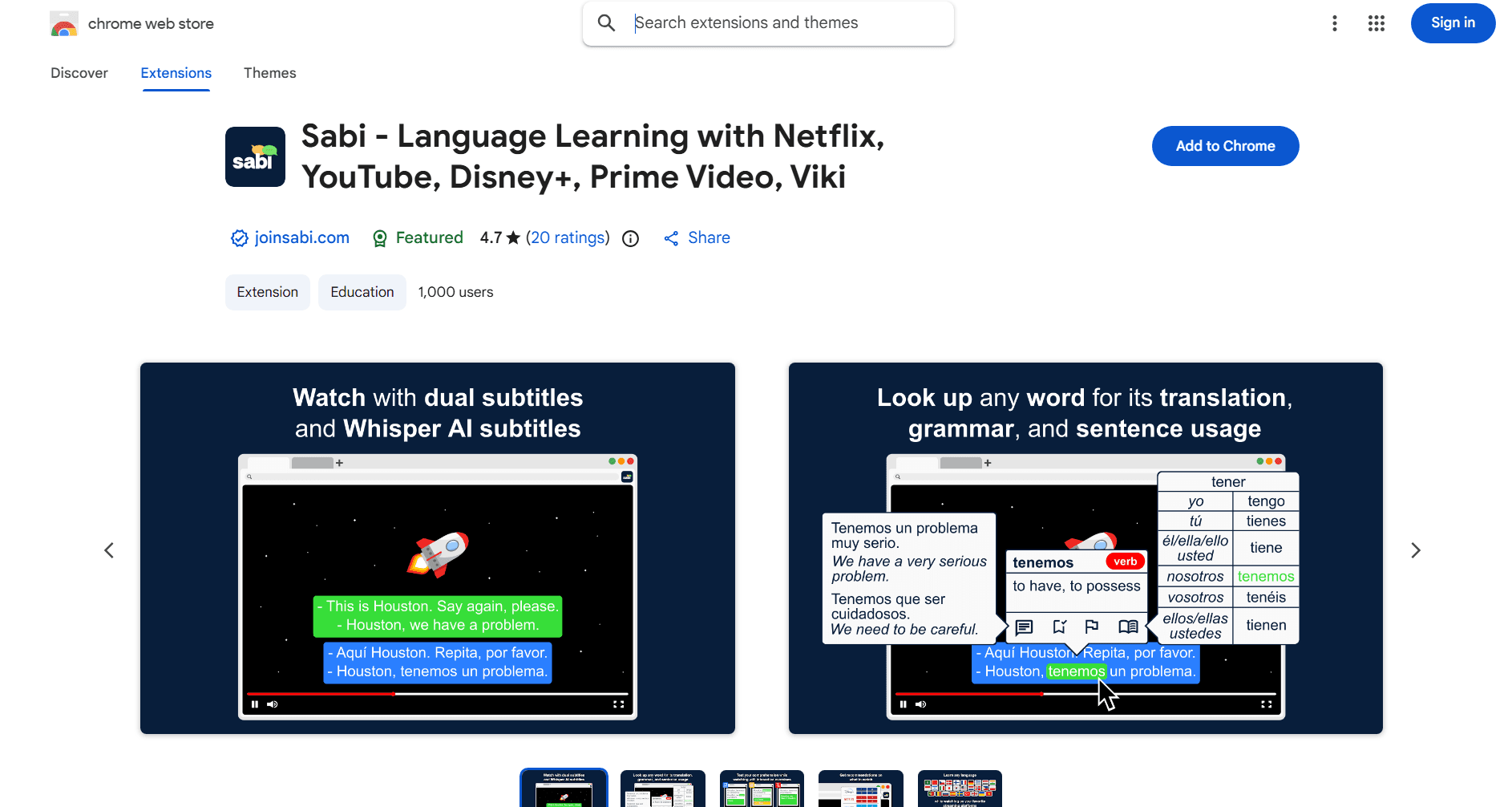
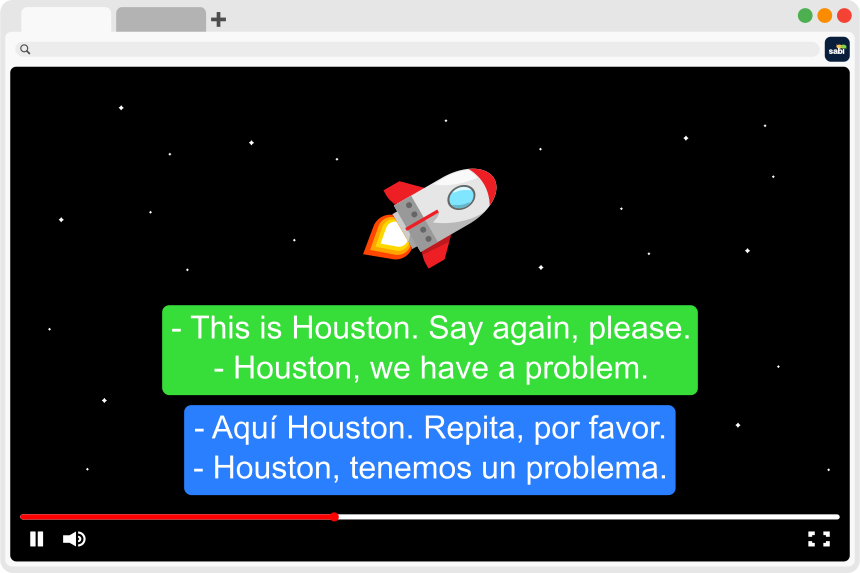
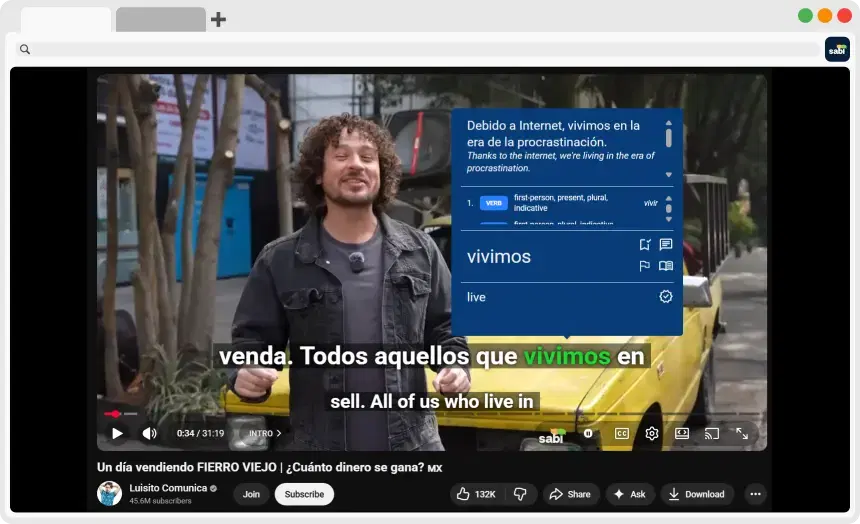
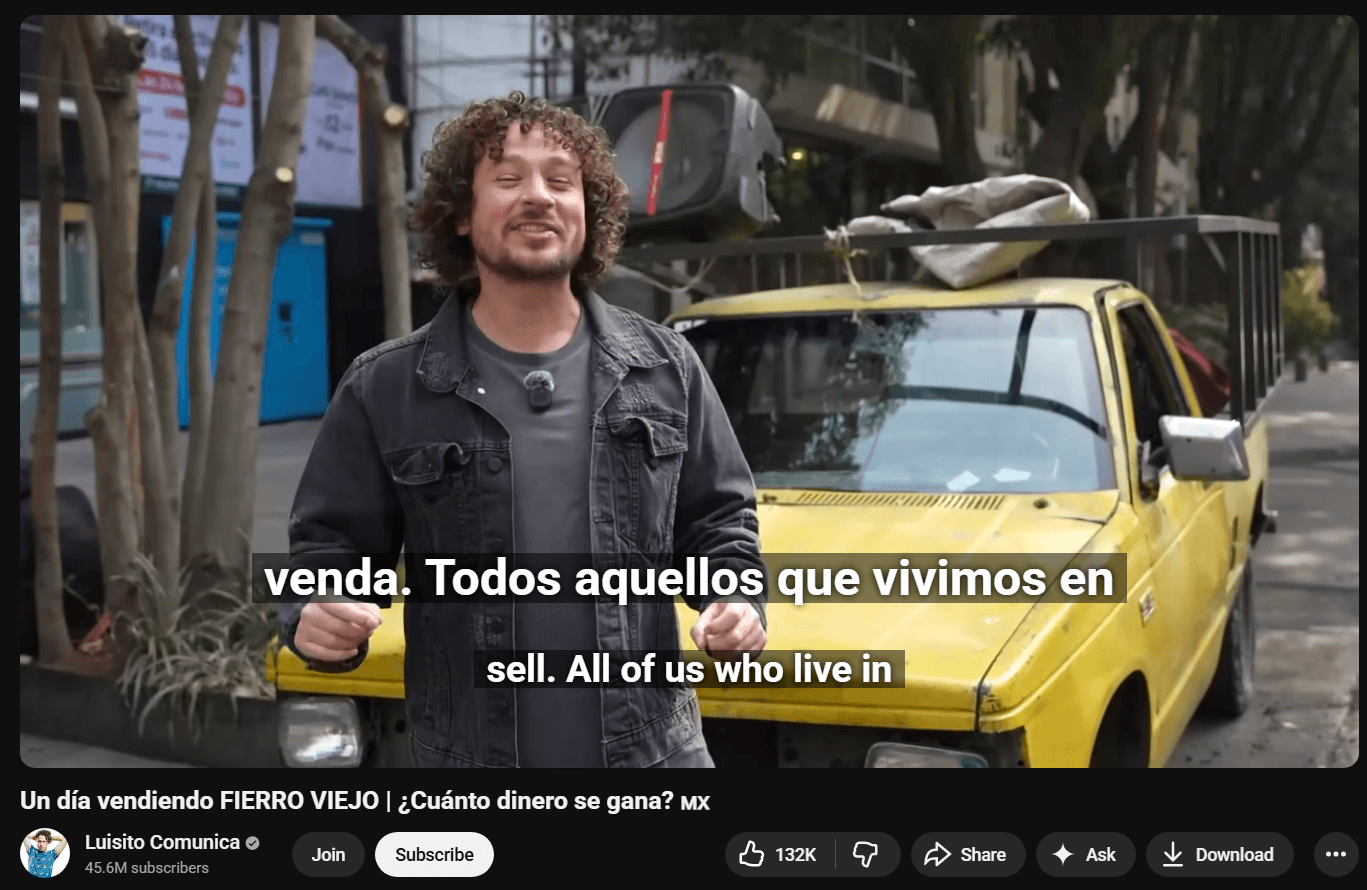
2. Turn On Dual Subtitles: Watch with subtitles in both your target and native language, helping you to follow along and learn in context (what are dual subtitles?). 👉 Try it for free
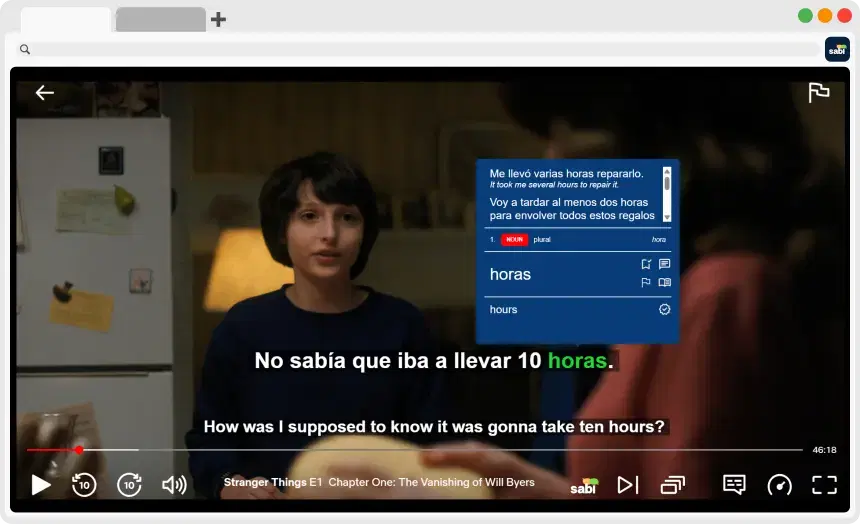
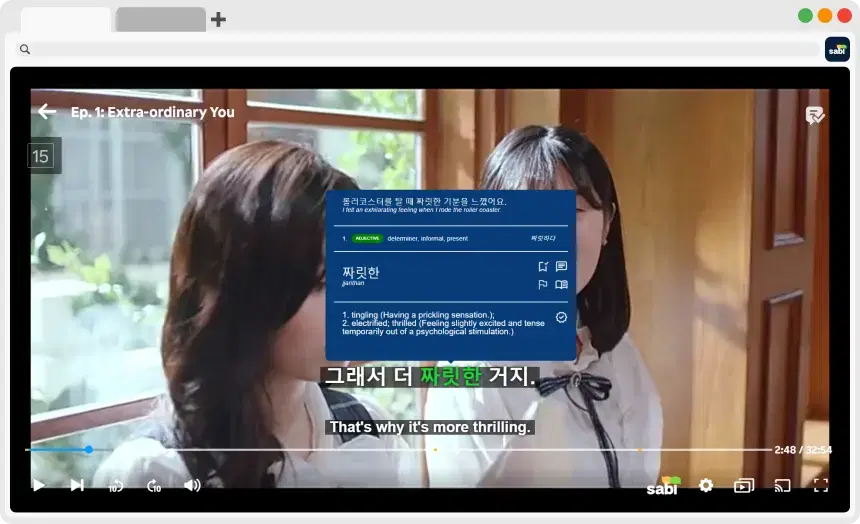
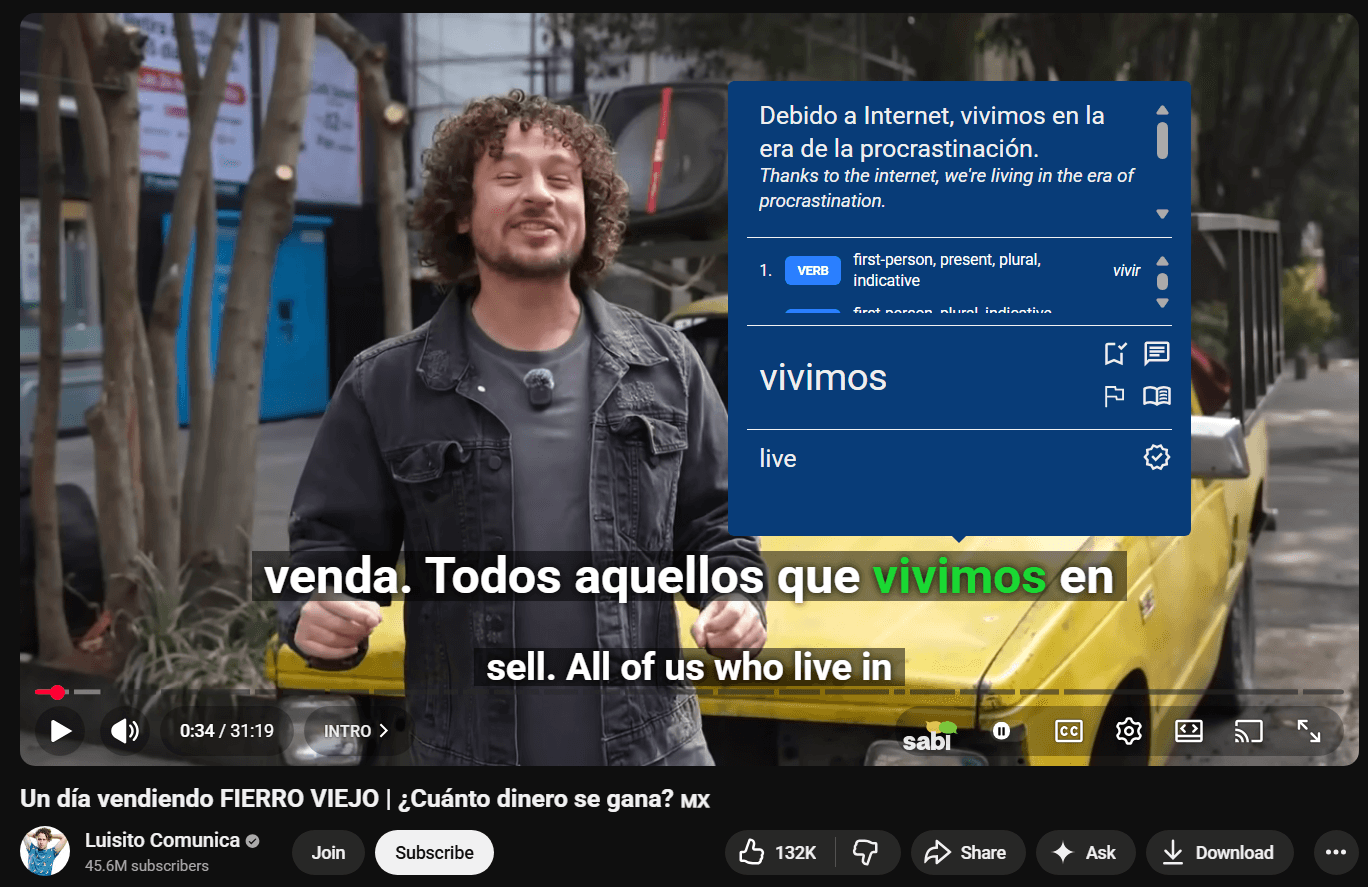
3. Hover Over Words to Learn: Simply hover over any word to see its translation, grammar information, and example sentences, all without interrupting your watching experience.
4. Enable Auto-Pause: Subtitles can automatically pause when they appear, giving you time to absorb new words or replay tricky phrases at your own pace.
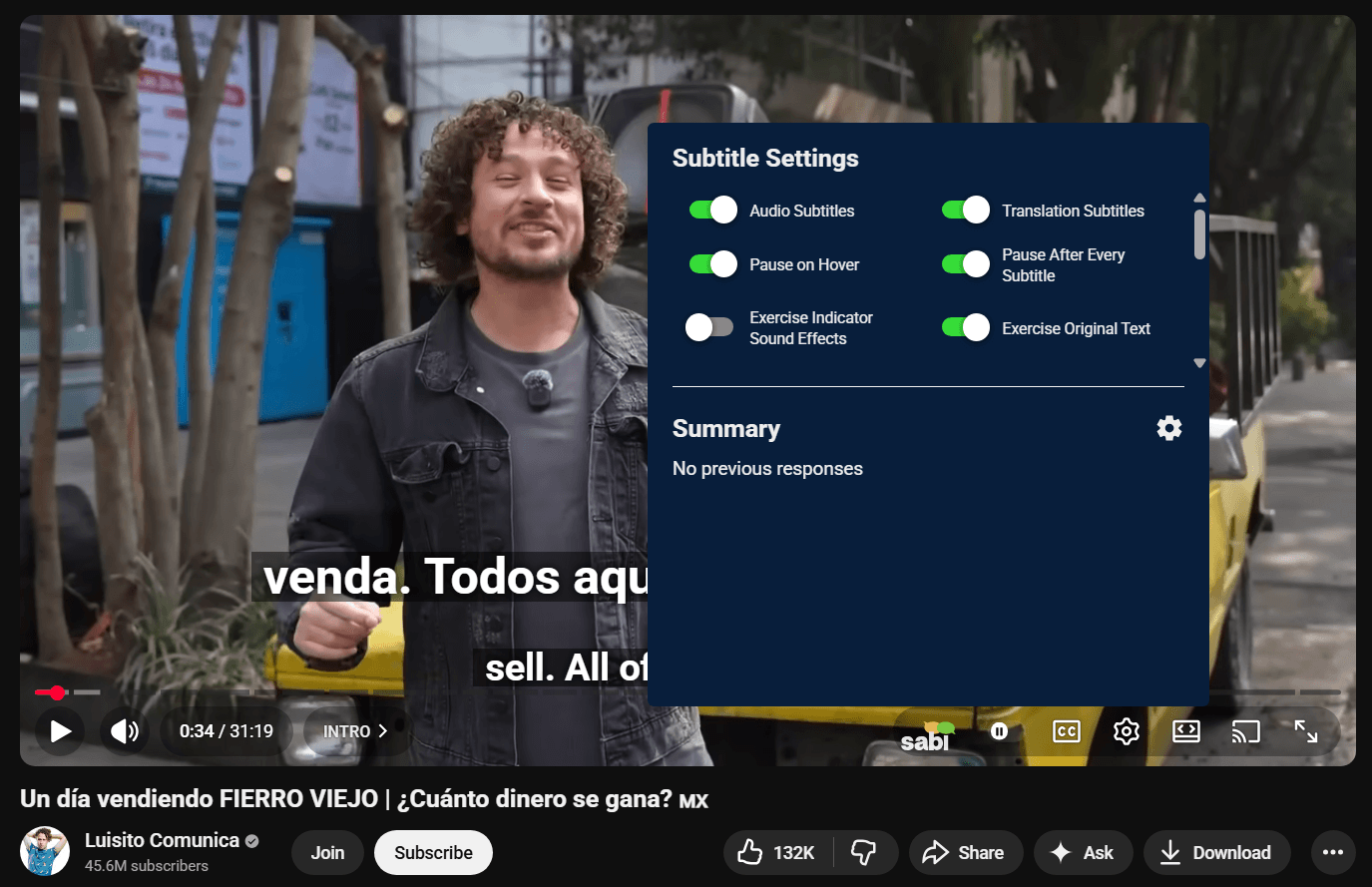
5. Practice With Interactive Exercises: While you're watching, Sabi gives you exercises on what you heard to make sure you're actually understanding what's going on.
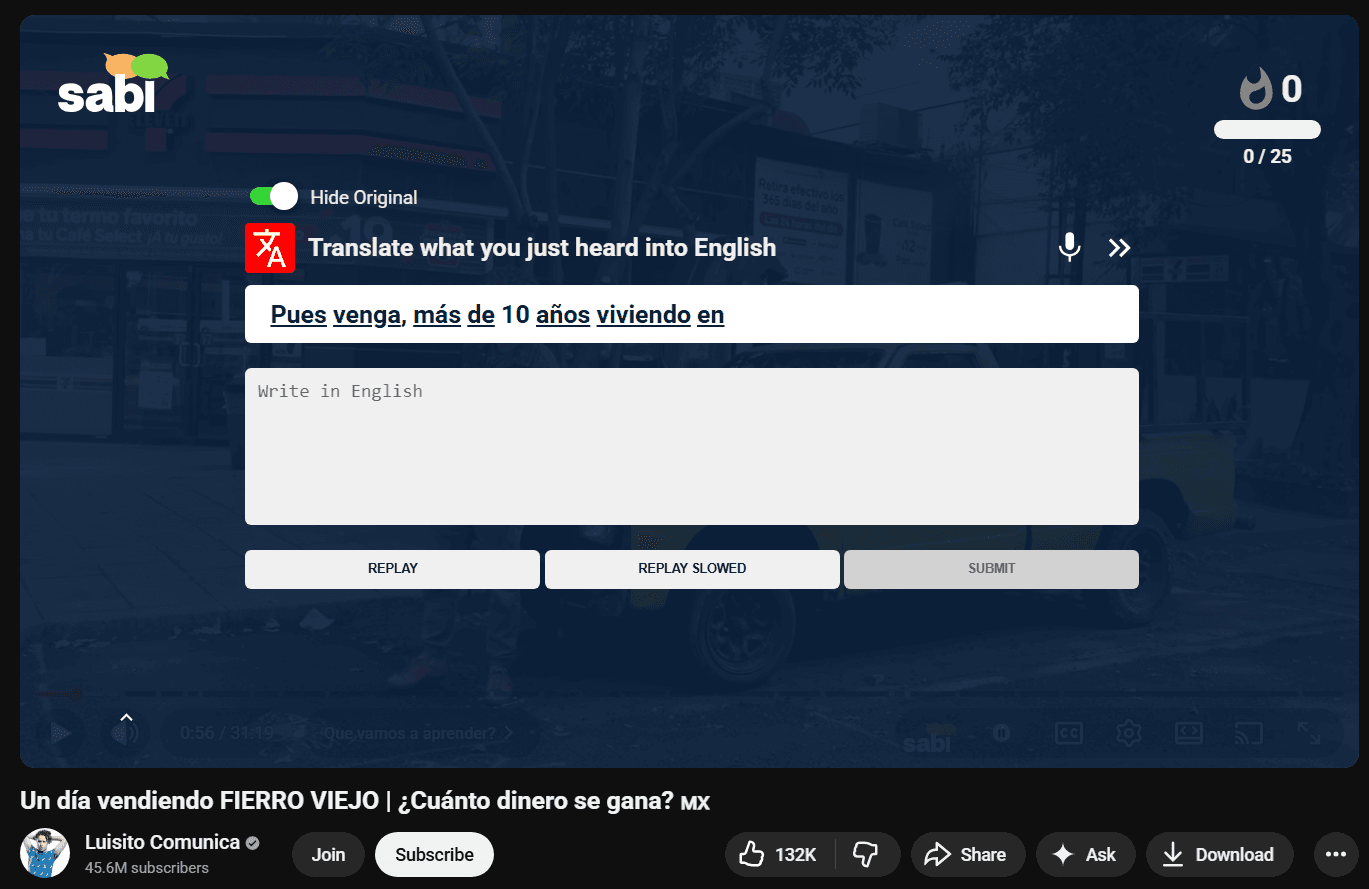
6. Whisper AI Subtitles: For videos without subtitles, Sabi can auto-generate accurate captions and translations to make sure you can still follow along.
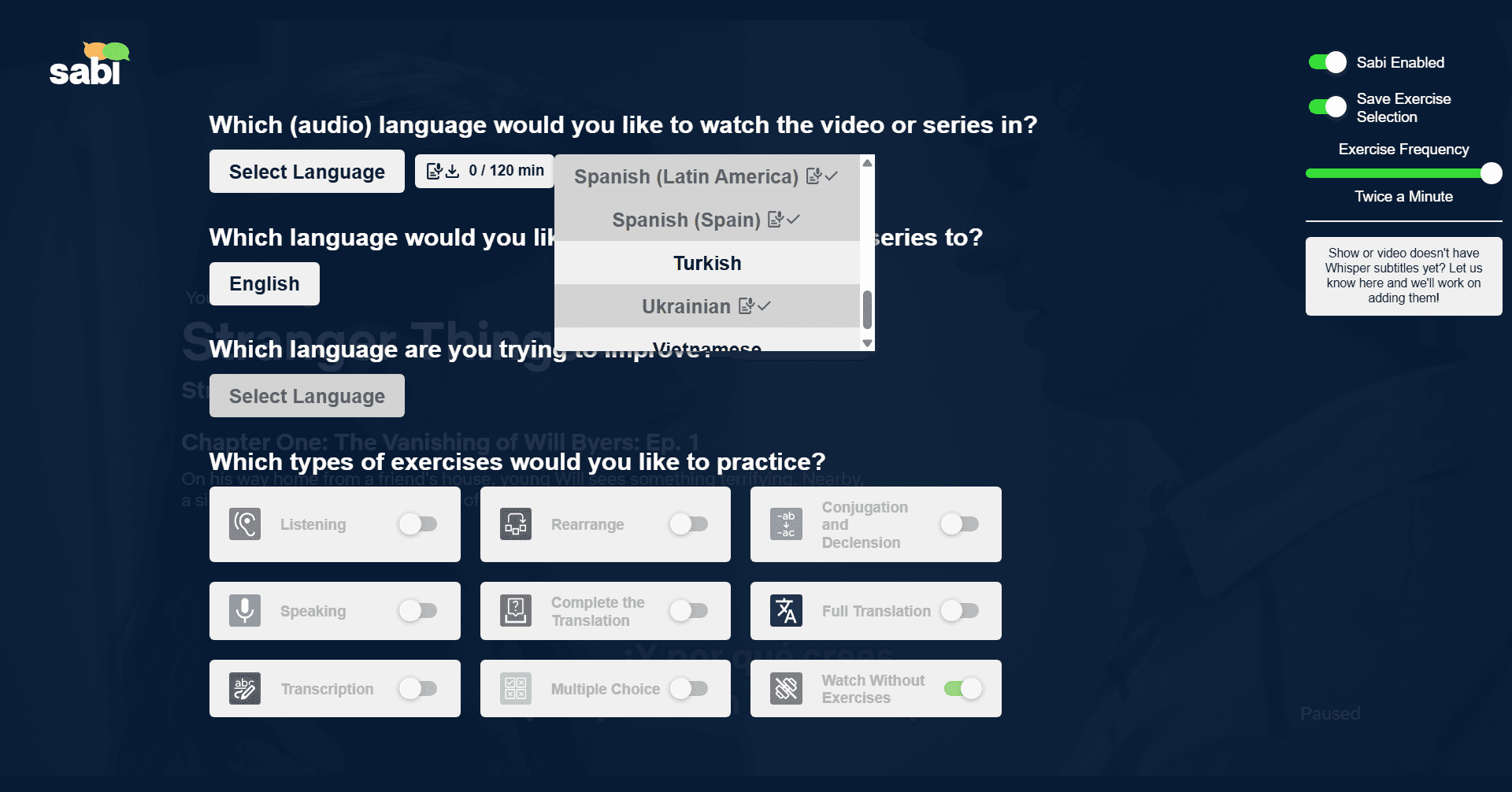
🌟 Tips for Maximizing Learning on YouTube with Sabi
1. Pick a Channel You Love: Choose one that matches your level and interests. Beginners should try slower-paced content, while advanced learners should pick natural-speed conversation videos.
2. Start with Subtitles: Use dual subtitles first, then try switching to only the target language over time.
3. Pause and Repeat: Don't hesitate to replay lines and repeat what characters say, as mimicking native speakers improves pronunciation.
4. Review Regularly: Reinforce what you learned on YouTube by practicing with Sabi's exercises afterward.
🎥 Why YouTube Works for Language Learning
YouTube has a number of advantages compared to other streaming platforms, mainly due to the fact that most of the content is produced by individual creators. This gives language learners a variety of different genres to choose from when wanting to practice a language.
Benefits of Learning with YouTube:
1. Unlimited Authentic Content: YouTube gives you direct access to native speakers using the language in real contexts, which is something traditional textbooks often lack. This means you hear slang, idioms, and natural speech patterns you might not get in a classroom.
2. Wide Variety of Topics: No matter your interest (cooking, gaming, travel, history) there's a channel in your target language for it. Watching content you enjoy keeps you motivated and helps vocabulary stick.
3. Diverse Accents and Dialects: Unlike most language learning platforms, YouTube offers speakers from different regions. This is key for understanding accents and pronunciation variations.
4. Customizable Speed: Slowing down playback can help beginners process speech, while advanced learners can speed things up for listening challenges.
5. Free Access: You can watch as much as you want without paying a cent, making it one of the most cost-effective ways to immerse yourself in a language.
🎬 Our Top Content Recommendations
For Learning Japanese 🇯🇵
Japanese channels are great for controlled input and cultural context. Beginners should focus on slice-of-life content and learner-oriented YouTubers who speak clearly and use standard grammar.
👉 Check out the Best YouTube Channels for Learning Japanese
👉 Explore our full Japanese language learning guide
For Learning Korean 🇰🇷
Korean channels are excellent for learning natural, conversational speech. Beginners should look for channels that focus on daily life and use everyday vocabulary, while avoiding historical or technical videos.
👉 Check out the Best YouTube Channels for Learning Korean
👉 Explore our full Korean language learning guide
For Learning Spanish 🇪🇸
It's best to start watching channels that get you used to natural pacing. Beginners should start with educational YouTubers who speak slowly and clearly, before moving on to fast-paced videos or dialect-heavy content.
👉 Check out the Best YouTube Channels for Learning Spanish
👉 Explore our full Spanish language learning guide
❓ Frequently Asked Questions
Can you really learn a language just by watching YouTube?
Yes, but only if you combine watching with active techniques. Passive watching alone is slow, so be sure to actively engage with the content by looking up words you don't know and repeating aloud various phrases. Using tools like Sabi to add dual subtitles, instant translations, and exercises will dramatically accelerate your progress and make the whole experience more enjoyable.
How long should I watch per day?
Even 20 to 30 minutes daily is powerful if done consistently. It's more important that you're paying attention and engaging with the video, rather than trying to reach a certain amount of time.
🎯 Final Thoughts
YouTube is one of the most powerful platforms for language immersion, but only if you have the right tools to make sense of what you're watching. With features like dual subtitles, word lookups, interactive exercises, and AI-generated captions, Sabi turns any video into a real learning opportunity. It's the easiest way to combine entertainment and education into a consistent learning habit.