How Many Words Do You Need to Understand TV?
💡 Quick answer: To understand 95% of the words in film and TV subtitles, you need to know roughly 3,100 words in English, 3,200 in French, 3,500 in Spanish, 4,100 in Korean, 4,700 in German and 5,000 in Japanese. We counted 2 million words of subtitles in each language to find out.
📊 The Results
For each language, we counted how many of the most common words you'd need to know to recognize 90%, 95% and 98% of the words in its subtitles. Here are the numbers, rounded:
Language | 90% | 95% | 98% |
|---|---|---|---|
English | 1,400 | 3,100 | 6,700 |
French | 1,400 | 3,200 | 6,900 |
Spanish | 1,700 | 3,500 | 7,100 |
Korean | 1,900 | 4,100 | 8,300 |
German | 1,700 | 4,700 | 12,000 |
Japanese | 2,200 | 5,000 | 10,100 |
So if you know the 1,400 most common French words, you'll recognize about 9 in every 10 words you hear in a typical French film or show.
🧠 What 90%, 95% and 98% Feel Like
These percentages sound high, but the gaps between them matter a lot:
— 90%: You'll miss about one word in every ten, which is often one word in every line. You can follow simple scenes, but you'll often need help.
— 95%: You'll miss about one word in twenty. Researchers often treat this as the point where you can follow most of what's going on, with some guessing.
— 98%: You'll miss about one word in fifty, and you can usually work it out from context. This is when watching starts to feel comfortable.
This is why subtitles and word lookups are so useful for learners. They fill the gaps until you know enough words to follow along on your own.
🌍 Language by Language
— English, French and Spanish need the fewest words. In all three, a few thousand common words cover most of everyday conversation.
— Korean needs more words than English, French and Spanish at every level. It needs slightly more than German at 90%, but fewer at 95% and 98%.
— German is close to the others at 90%, but it needs far more words at 98%. A big part of the reason is compound nouns, which German writes as one word, like Kühlschrank (fridge) or Kaufhaus (department store). Many are easier to understand than their length suggests, because you may already know the parts.
— Japanese needs the most words at 90% and 95%. Learners also have to read kanji, which makes Japanese subtitles harder to keep up with. That's why tools that show readings are especially useful.
Small differences between these numbers aren't meaningful, because we had to use different tools for each language. The larger gaps are more reliable.
📺 How to Learn the Words You Need
Thousands of words sounds like a lot, but you don't have to study them from a list. The most common words come up again and again in what you watch, so watching itself helps you learn them. Seeing words in context also helps them stick.
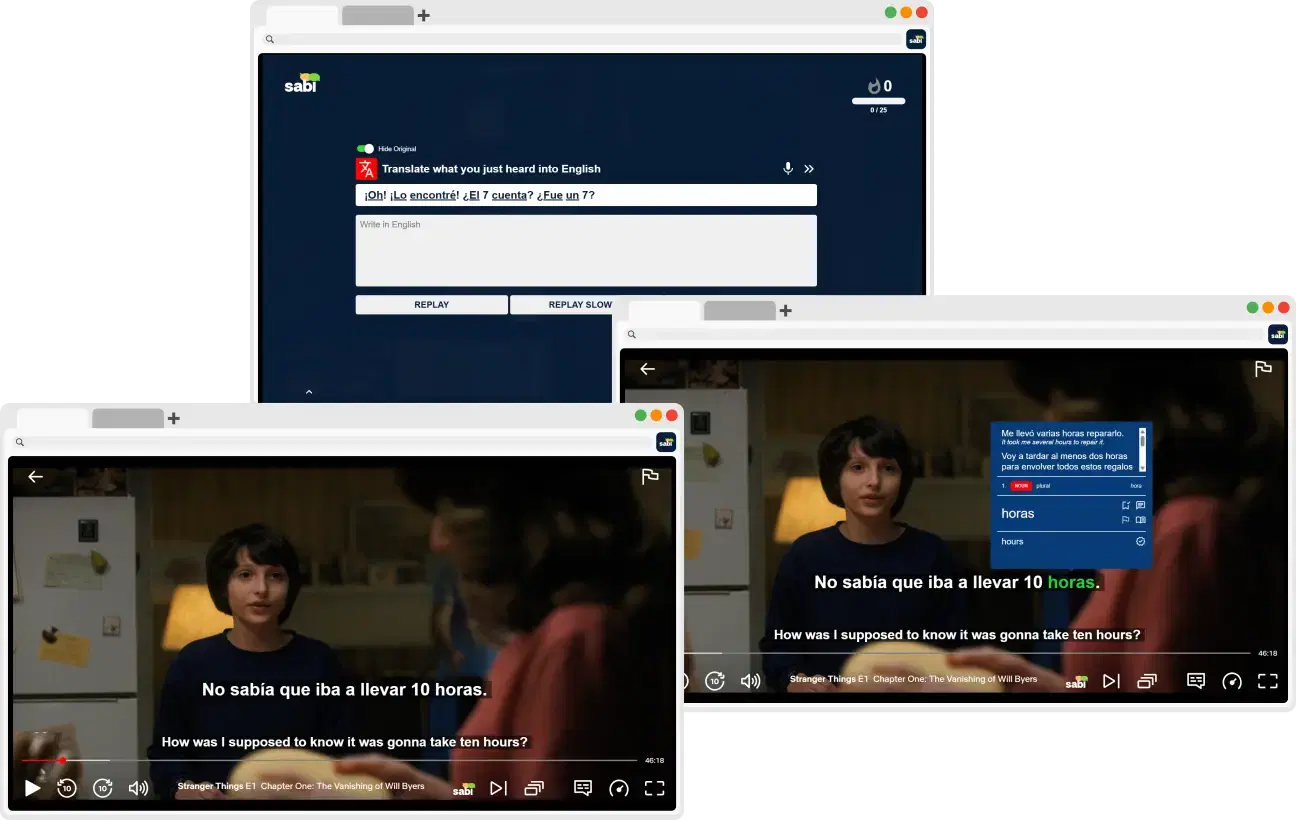
The hard part is that you'll miss a lot at first. Sabi is a browser extension that helps you fill those gaps on Netflix, YouTube, Disney+, Prime Video and Rakuten Viki:
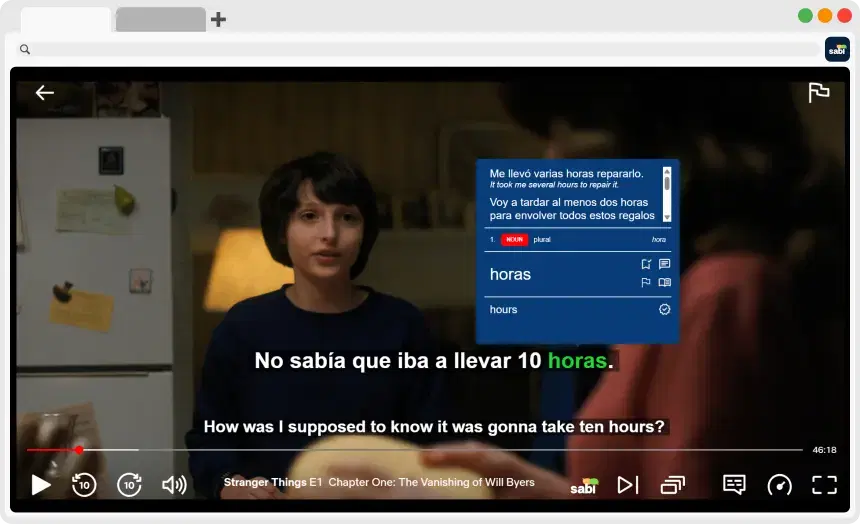
— Dual subtitles show your target language and your own language together, so you don't get lost.
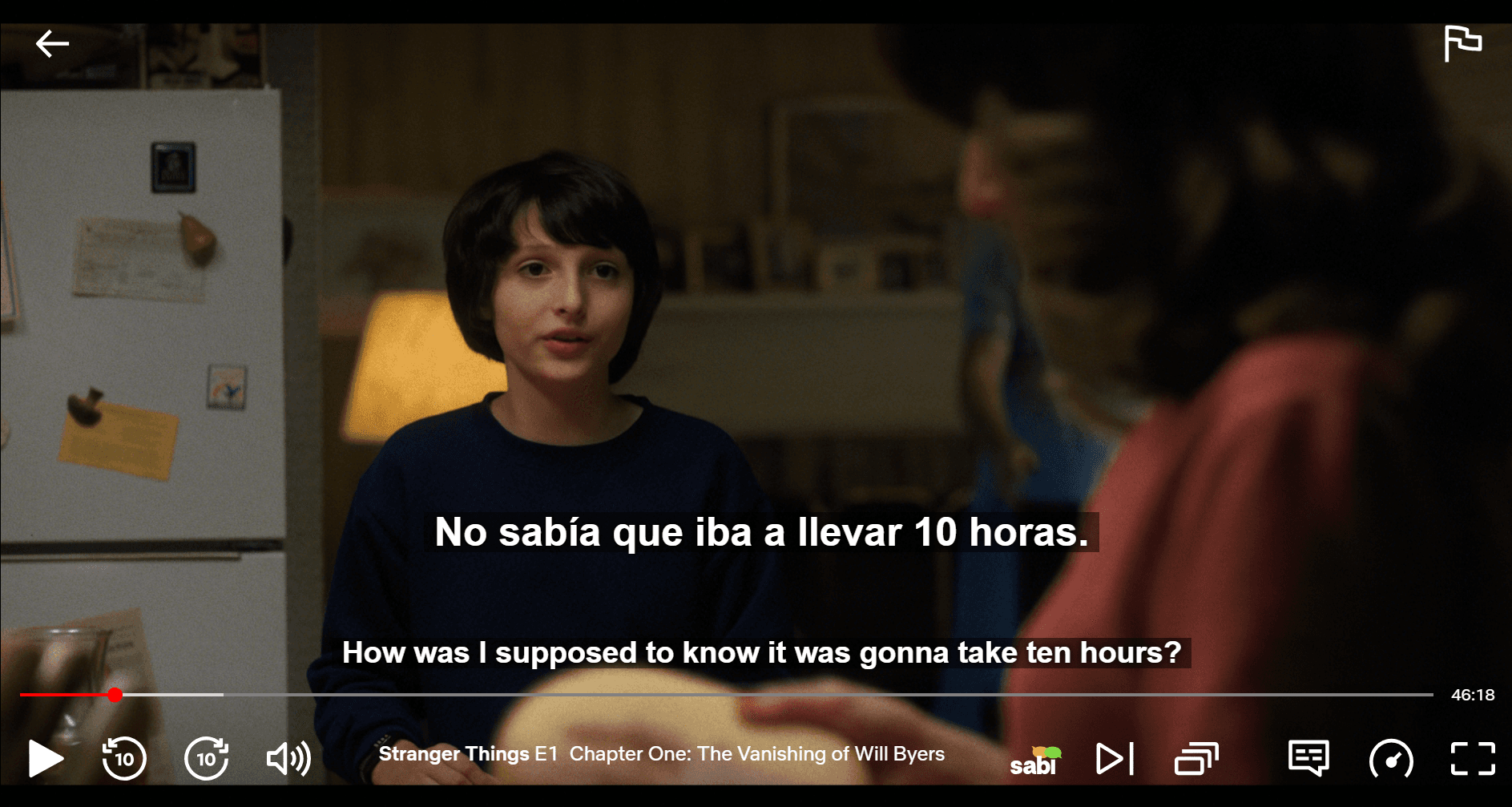
— Hover translations explain any word you don't know, without leaving the show.
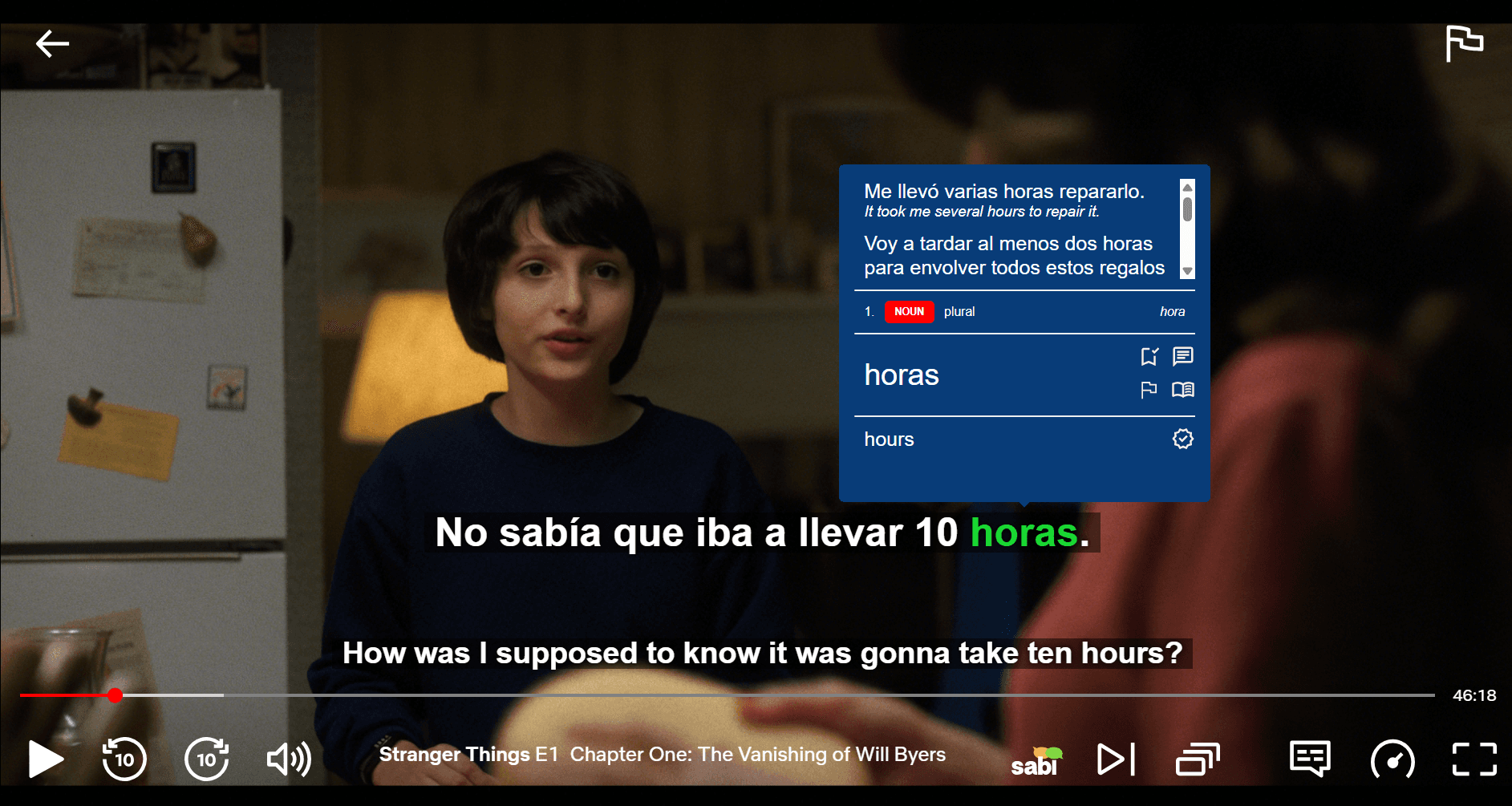
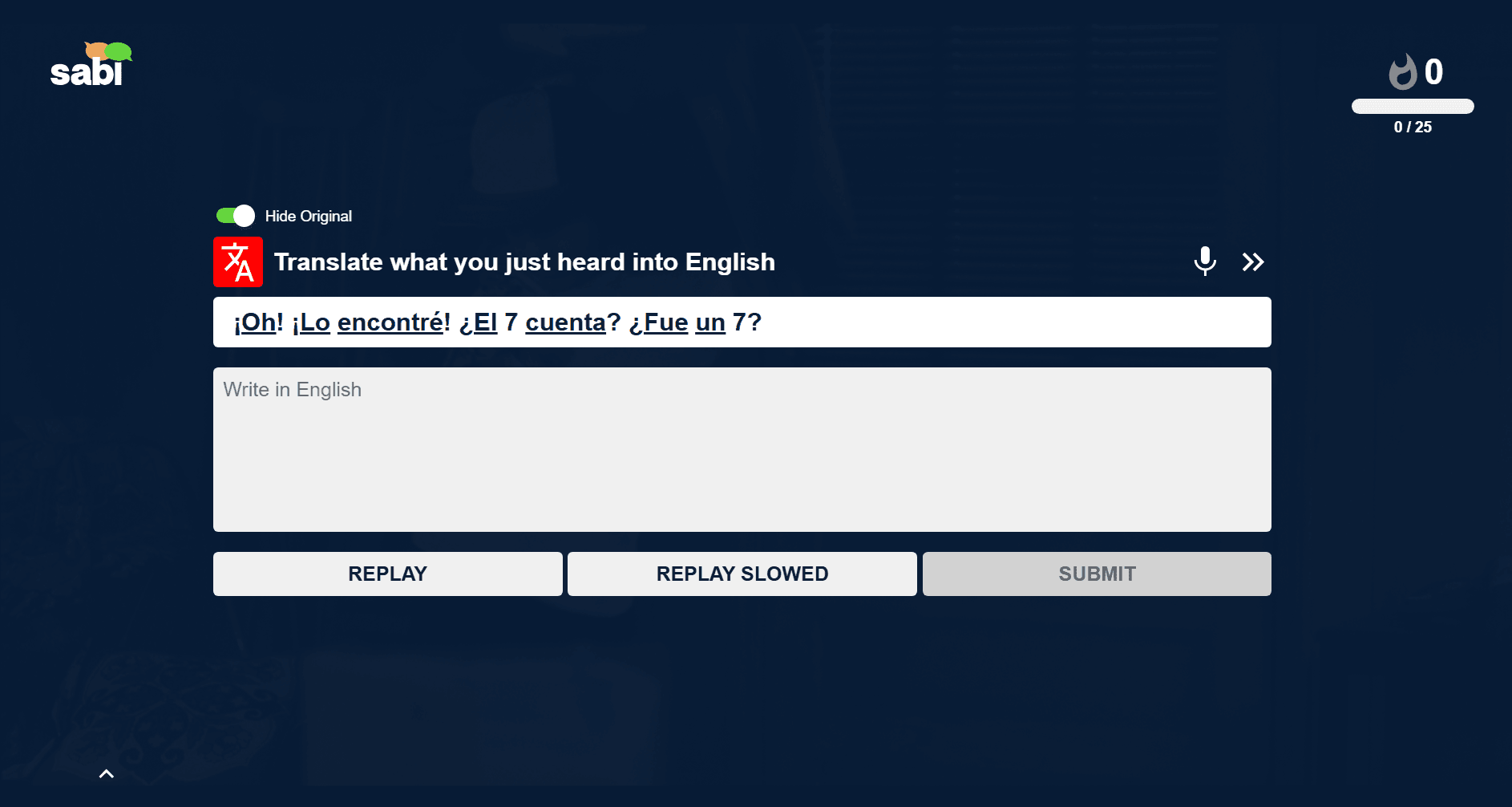
— Exercises while you watch test you on what you just heard, so new words stick.
🔬 How We Did It
We used the OpenSubtitles corpus from OPUS, a large collection of film and TV subtitles made available for research (Lison and Tiedemann, 2016). For each language, we took a sample of 2 million words.
— We counted dictionary forms, so "went", "goes" and "going" all count as "go". We did the same with Japanese and Korean verb endings.
— We left out names, numbers and punctuation, since you don't need to learn them in the usual sense.
— We used standard language tools for each language: fugashi with UniDic for Japanese, Kiwi for Korean, and spaCy with Simplemma for the European languages.
— We checked our English result against an earlier study. Webb and Rodgers (2009) found that about 3,000 word families cover 95% of the words in English TV, and about 7,000 cover 98%. Our English numbers are in the same range. They counted word families, which group related words together, so the numbers aren't directly comparable.
— The limits: The subtitles are mostly from films, and some are made by fans. Each language's tools split words in slightly different ways, and each German compound counts as its own word. Treat the numbers as estimates, not exact targets.
❓ Frequently Asked Questions
How many words do you need to understand Japanese TV?
About 5,000 words for 95% of what's said and about 10,000 for 98%, based on our count of Japanese subtitles. Japanese needed the most words at 90% and 95% of the six languages we looked at.
How many words do you need to understand Spanish TV?
About 3,500 words for 95% of what's said and about 7,100 for 98%, based on our count of Spanish subtitles.
How many words do you need to understand English TV?
About 3,100 words for 95% of what's said and about 6,700 for 98%. That's similar to earlier research on English TV, which used a different way of counting words.
Is 1,000 words enough to watch TV in another language?
Not quite. In the languages we looked at, the 1,000 most common words cover between about 84% and 88% of what's said, so you'd still miss a word or two in most lines. Subtitles and word lookups help you follow along while you learn more.
Do you need to know 98% of the words to enjoy a show?
No. You can enjoy and learn from shows well before that, especially with subtitles. Around 98% is when most people can follow without help.