How to Immerse Yourself in a Language at Home
💡 Quick answer: You can immerse yourself in a language at home by switching things you already do to your target language. Start here:
1. Watch your shows in that language.
2. Listen to it while you do chores or commute.
3. Change your phone to that language.
4. Read something short every day.
5. Talk to someone every week.
❓ Do You Need to Live Abroad to Be Immersed?
No. Immersion just means spending lots of time with a language in real situations, and most of that can happen at home. Living abroad helps, but plenty of people who move to another country still spend their days in their own language.
What home can't do is force you to use the language. Nobody will make you order food or ask for directions, so you need to build that pressure yourself. The upside is that you control how hard it gets.
The easiest way to start isn't more study time. Take things you already do and switch them to your target language.
📺 1. Watch Your Shows in Your Target Language
If you only pick one habit, make it this one. You're already watching something most days, and shows give you hours of natural speech in a story you want to follow.
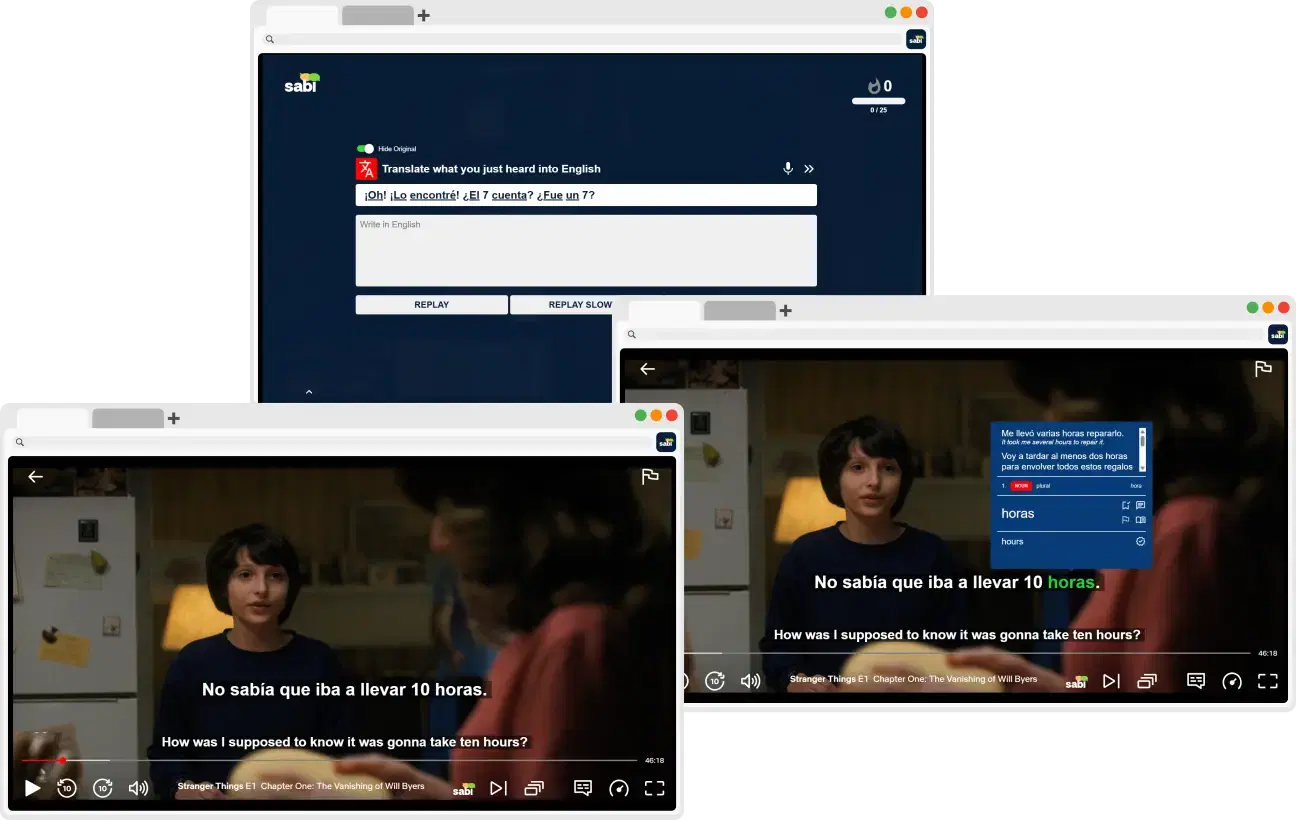
The catch is that real shows can be too difficult at first. Sabi is a browser extension that makes them easier on Netflix, YouTube, Disney+, Prime Video and Rakuten Viki:
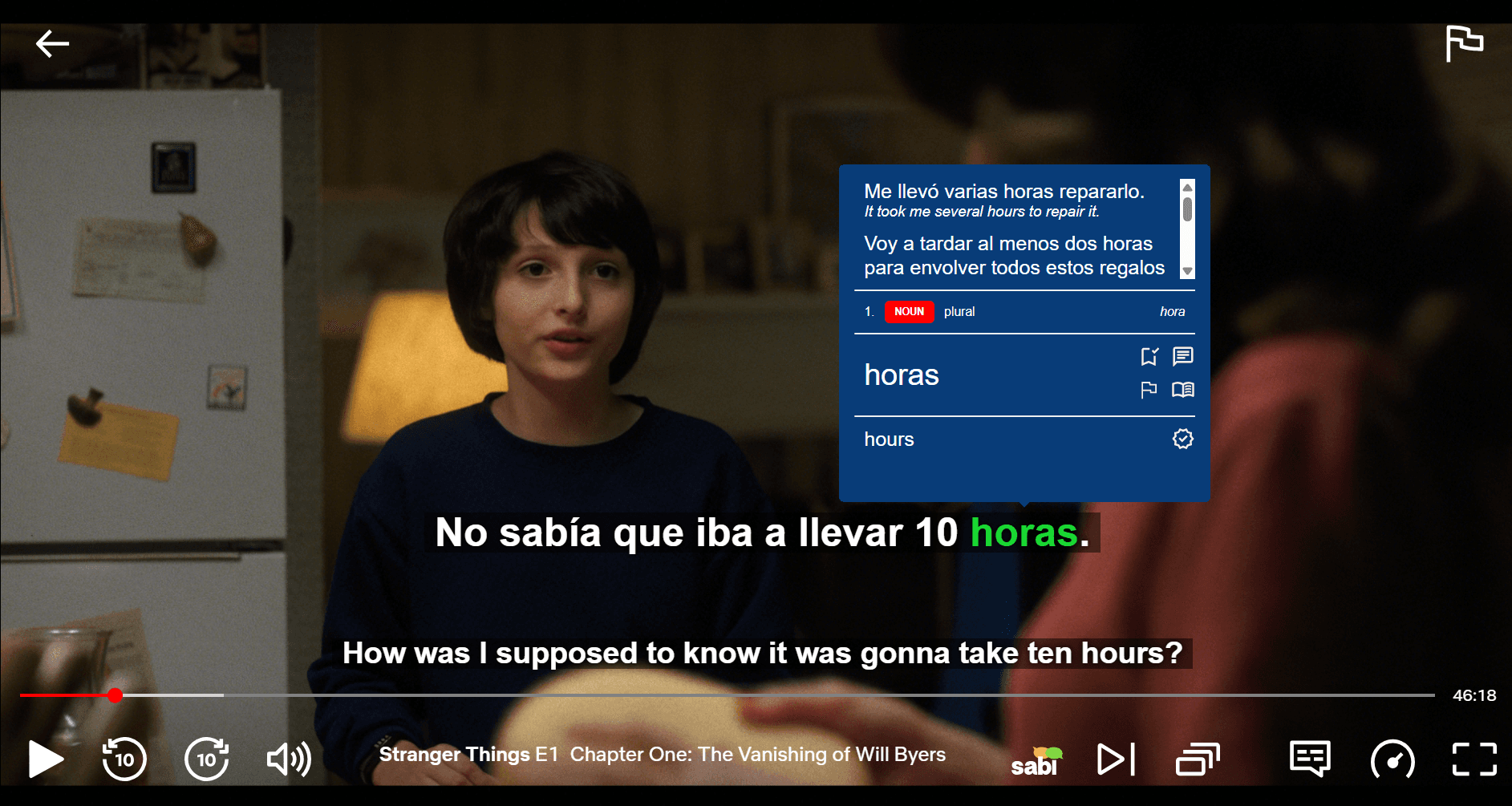
— Dual subtitles show your target language and your own language together.

— Hover translations explain any word without leaving the show.
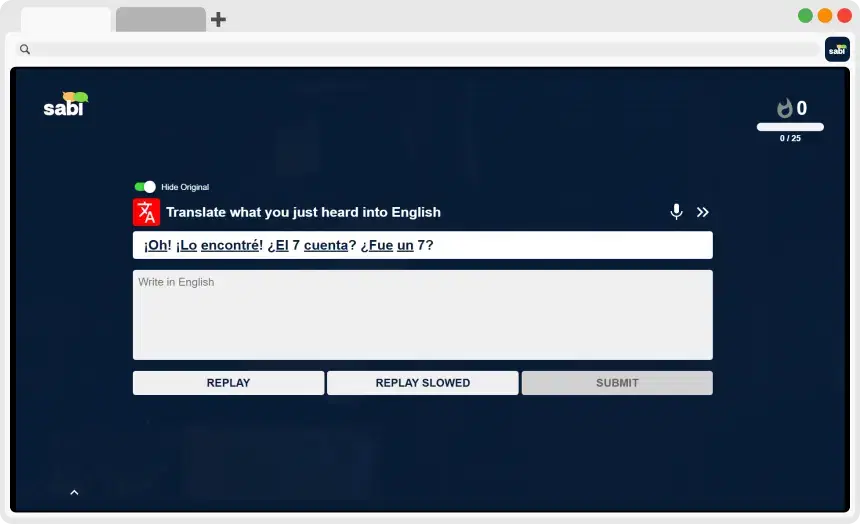
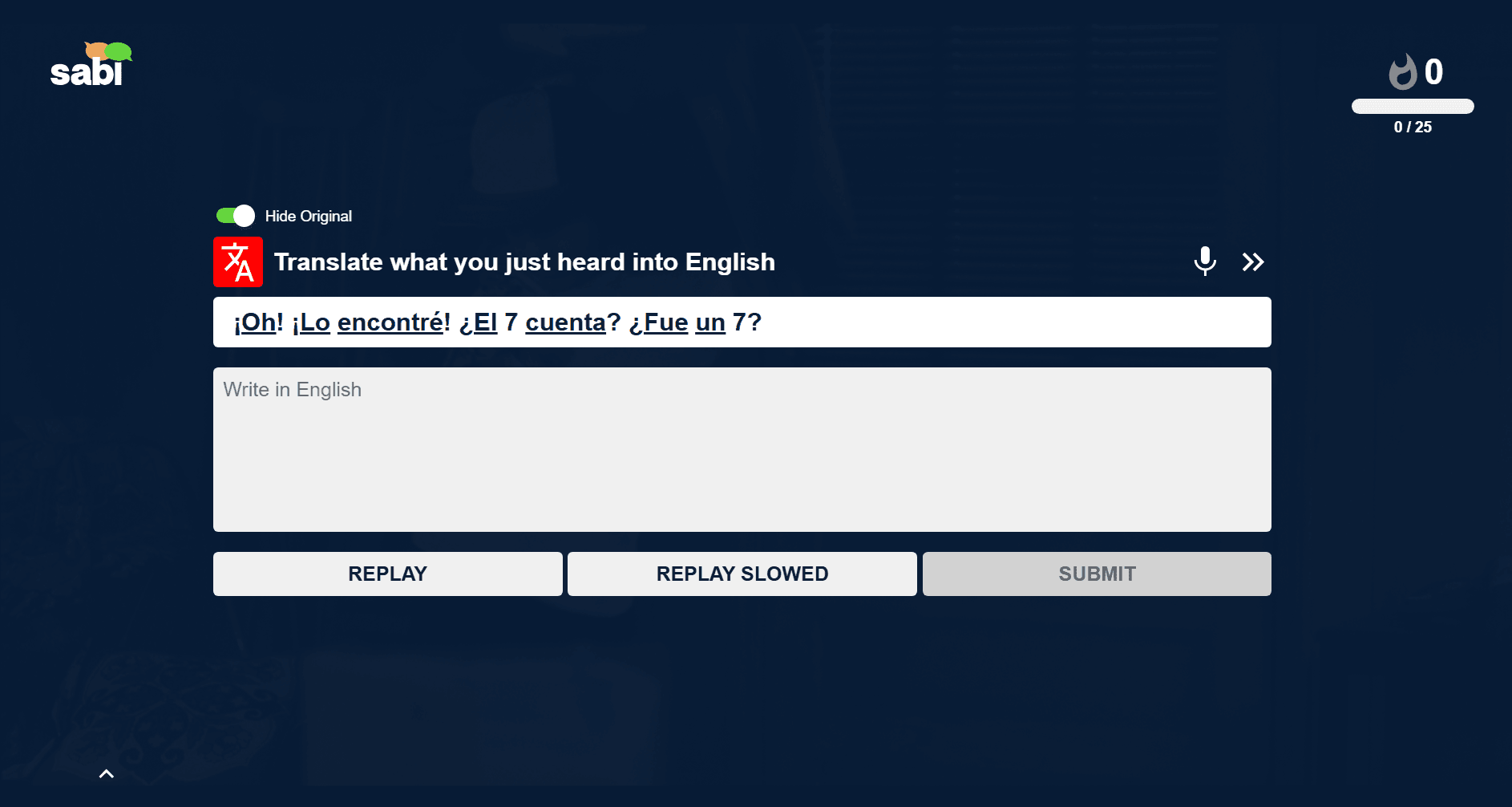
— Exercises while you watch test you on what you just heard.
🎧 2. Listen During Everyday Tasks
Chores, commutes and walks are free listening time. Play podcasts, radio or music in your target language.
You won't catch everything while you're busy, and that's fine. This kind of listening helps you get used to the sound and rhythm of the language. Use it alongside focused study, not in place of it. See our guide to active vs. passive learning.
📱 3. Change the Language on Your Phone
Switching your phone to your target language takes a minute, and you'll see the words every day. Since you already know where everything is, you can work out what most of the menus mean.
If that's too much at first, start with one app you use often, or wait until you know the basics.
📖 4. Read Something Short Every Day
Keep it small so you actually do it. Follow accounts in the language, read the news on a topic you know, or try a recipe. Choose things you'd read anyway, because knowing the topic will help you guess new words.
✍️ 5. Think and Write in Your Target Language
Describe what you're doing in your head, or write three sentences about your day. You'll quickly notice which words you're missing, and those are the ones worth looking up.
🗣️ 6. Talk to Someone Every Week
This is the hardest part to do alone, and the one that makes the biggest difference to your speaking. Try a tutor, a language exchange partner or a local conversation group. If you're not ready for that, you can practice with ChatGPT first.
🗓️ 7. Build a Daily Routine
Immersion works because it adds up, so a routine you can keep matters more than a perfect one. Here's a simple example:
When | What to do |
|---|---|
Morning | Short podcast |
Commute | Music or radio |
Break | Read something short |
Evening | One episode of a show |
Weekly | One conversation |
⚠️ Common Immersion Mistakes
— Starting with content that's too hard: If you understand almost nothing, you'll quit. Pick something easier, or use subtitles until you can follow along. See why it's hard to find something to watch.
— Only listening passively: Background audio helps, but you also need time when you're paying full attention.
— Trying to do everything at once: Add one habit at a time, and keep the ones you enjoy.
— Never speaking: You can understand a lot and still struggle to talk if you don't practice.
🌍 How to Immerse Yourself in German, Spanish, Japanese and More
The habits above work for any language, but here's what to focus on in each:
— German: Listen for der, die and das, because shows let you hear noun genders in context. Learn German with shows.
— Spanish: Pick one region's accent to focus on at first. Learn Spanish with shows.
— French: Spoken French can sound very different from how it's written, so keep French subtitles on. Learn French with shows.
— Japanese: Keep Japanese subtitles on so you can connect what you hear with kanji. Learn Japanese with shows.
— Korean: Dramas are a good way to hear the difference between polite and casual speech. Learn Korean with shows.
— English: Start with how to learn English with Netflix.
❓ Frequently Asked Questions
Can you immerse yourself in a language at home?
Yes. Watching, listening and reading in your target language every day give you much of what immersion offers. The main thing you have to add yourself is speaking practice.
What is the best way to learn German through immersion?
Watch German shows with German subtitles, listen to German during everyday tasks, and speak with someone every week. Add one habit at a time so you can keep it up.
How many hours a day do you need for language immersion?
There's no set number. Even 30 minutes a day helps if you do it regularly, and everyday tasks like commuting can add more time without much effort.
Does watching TV count as immersion?
Yes, as long as you can follow enough of it to stay interested. You'll learn more if you pay attention to the language and look up new words.
Should beginners try immersion?
Yes, but start with easy content and use subtitles. Learning some basics first will help you get more from it.