How to Gamify Language Learning: Guide for 2026
Last Updated:
Language learning isn't always easy, but it doesn't have to feel like a chore. By turning learning into a game, gamification taps into our natural desire for achievement, progress, and fun. It's a proven strategy in education, and it's changing the way people learn languages. In this article, we'll explore how gamification helps language learners stay engaged, and what methods you can use to keep your learning fun and effective.
Why Gamification Works for Language Learning
Gamification applies game-like elements such as points, levels, and rewards to non-game activities. In the context of language learning, it can make the process more motivating, rewarding, and even addictive in the best possible way. It works because it:
1. Boosts Motivation
Gamification gives learners short-term goals and immediate rewards. Whether it's earning a badge or unlocking an achievement, that little hit of progress keeps you coming back.
2. Encourages Consistency
Learning a language requires regular practice. Gamified systems reward streaks, milestones, and daily activity, making it easier to stay on track.
3. Makes Learning Feel Less Like Studying
Games are inherently fun! Adding playful elements to your study routine can reduce the feeling of effort and make you more likely to keep going, even when it gets challenging.
4. Builds a Sense of Progress
Tracking your growth visually, like leveling up or collecting achievements, gives a tangible sense of improvement, which is especially helpful when language progress can feel slow or invisible.
Method 1: Manual Gamification
You don’t necessarily need an app to hack your brain’s reward system. In fact, "manual" gamification is often more powerful because it is 100% customizable to your goals. You are the Game Master of your own learning journey. Here are three ways to build your own game loop:
1. The "Don't Break the Chain" Streak
The rule is simple: for every day you study, put a big red X on a physical calendar.
The Goal: Do not break the chain of X’s.
Why it works: Seeing a visual representation of your consistency creates a psychological cost to quitting. After 10 days, you won't study because you want to; you'll study because you can't bear to see an empty square on the calendar.
2. Set "Daily Quests" (Mini-Challenges)
In video games, you have main missions (fluency) and side quests (daily tasks). Breaking your learning into side quests makes the mountain feel climbable. Instead of a vague goal like "study Spanish," give yourself concrete, pass/fail quests:
Quest A: Learn 5 new vocabulary words.
Quest B: Watch one episode of Money Heist without pausing.
Quest C: Speak out loud for 2 minutes.
3. Create an "Unlock" System (Rewards)
This is the most important part: Positive Reinforcement. In a game, when you beat a boss, you get loot. You should treat your language milestones the same way.
Low-Level Loot: If you complete your streak for the week, treat yourself to a fancy coffee or a movie night.
Boss Level Loot: If you finish a textbook or watch an entire series in your target language, unlock a "big" reward like buying a new device or taking a weekend trip.
Method 2: Using Apps
If drawing X's on a physical calendar sounds like too much administrative work, you can also let technology handle the heavy lifting.
Gamified apps are designed to automate the feedback loop. Instead of you having to decide if you did a "good job" today, the app gives you immediate, tangible feedback in the form of XP, Streaks, and Leaderboard rankings.
These apps generally fall into two categories:
The "Carrot": Apps like Duolingo that use positive reinforcement (badges, chests, and leagues) to keep you addicted.
The "Stick": Apps like Duolingo (again) that use negative reinforcement (losing hearts, losing your streak) to prevent you from quitting.
However, choosing the wrong app can actually backfire. If an app feels too much like a "game" and too little like "learning," you might rack up points without actually learning to speak. To help with this, we tested the top contenders to find which ones actually deliver results.
👉 See our ranked list of the Best Gamified Language Learning Apps
Method 3: Gamifying Real Content
While apps like Duolingo are great for building a habit, they often rely on artificial sentences ("The bear eats the apple"). To reach true fluency, you need to consume real native content like movies, TV shows, and YouTube videos.
But watching native TV is hard! It’s easy to get frustrated and zone out.
This is where Content Gamification comes in. By adding game mechanics to your Netflix or YouTube binge, you transform passive entertainment into an active study session.
When you gamify video-based language learning, you:
— Turn passive watching into interactive practice
— Feel rewarded for every scene or episode you complete
— Build confidence as you "level up" your comprehension
— Stay motivated with constant feedback and progress tracking
This approach makes it possible to learn without even realizing you're studying, because it feels like fun.
How Sabi Gamifies Learning from Videos
Sabi is a browser tool designed to help you learn languages through videos and streaming platforms by gamifying Netflix, YouTube, Disney+, Prime Video, and Rakuten Viki. Here's how Sabi makes gamified learning simple and enjoyable:
1. Interactive Subtitles You Can Learn From
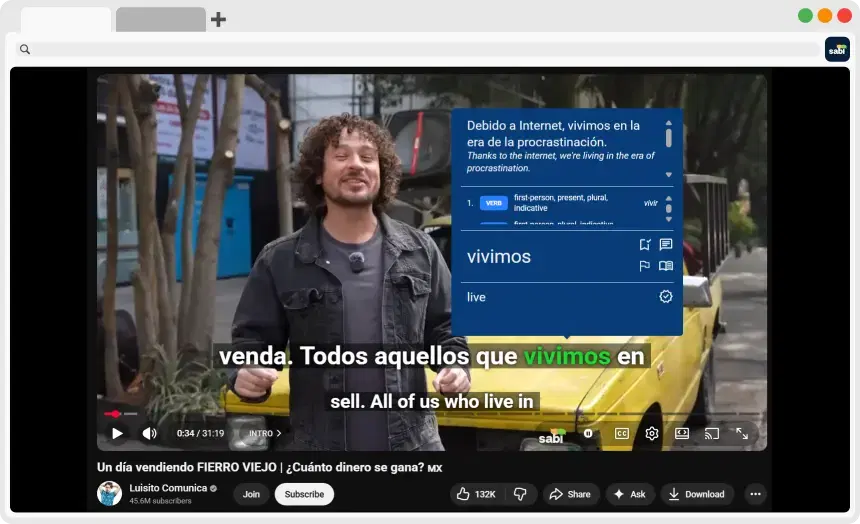
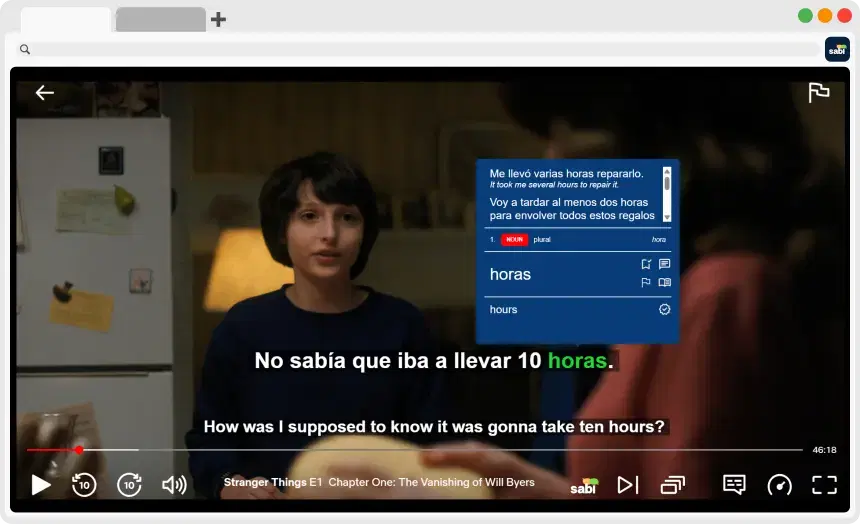
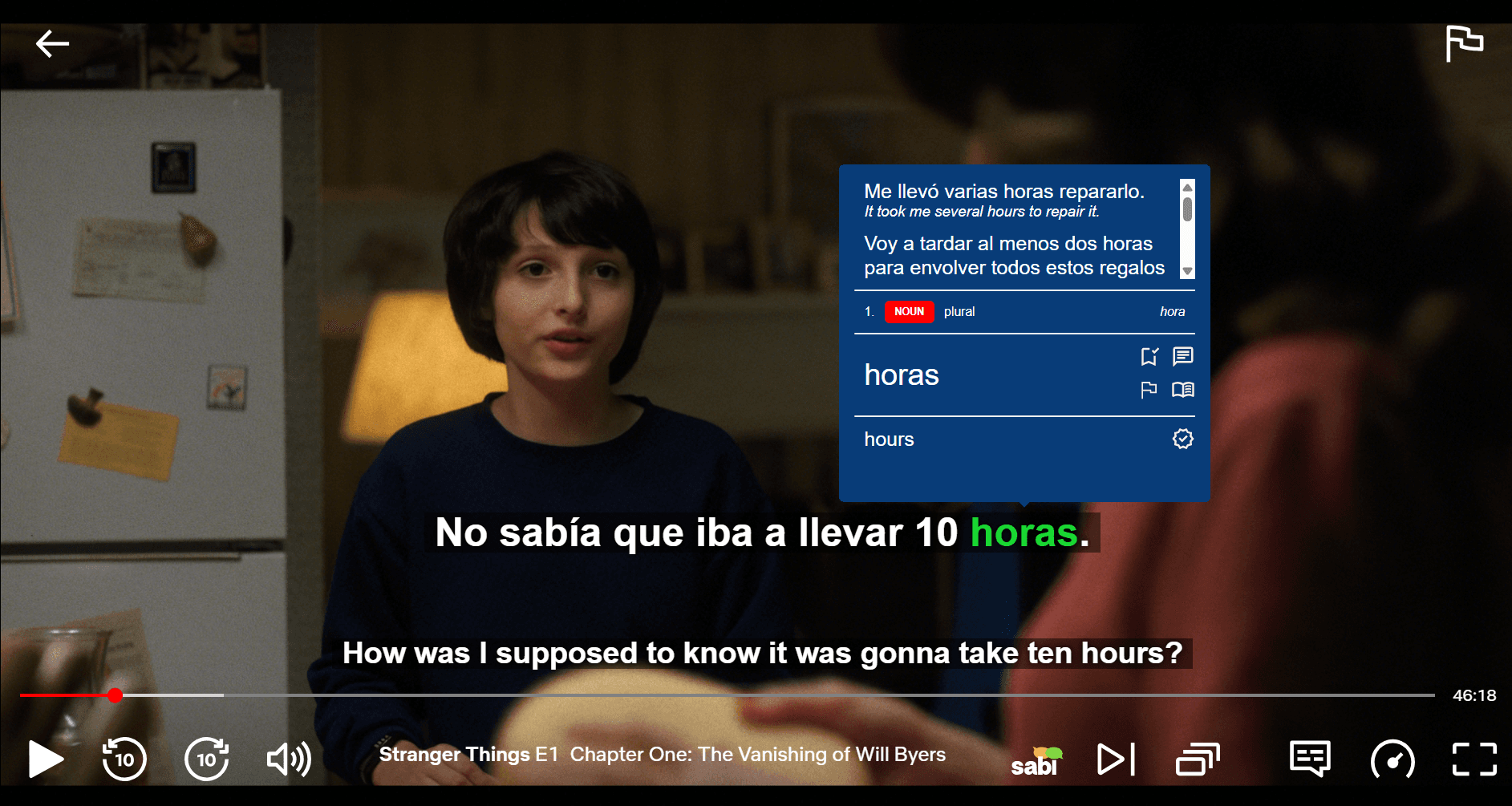
Watch with dual subtitles in both your target and native language. Hover over any word to instantly get its definition, grammar information, and usage examples, transforming every subtitle into a mini learning moment.
2. Practice Exercises That Feel Like Mini-Games
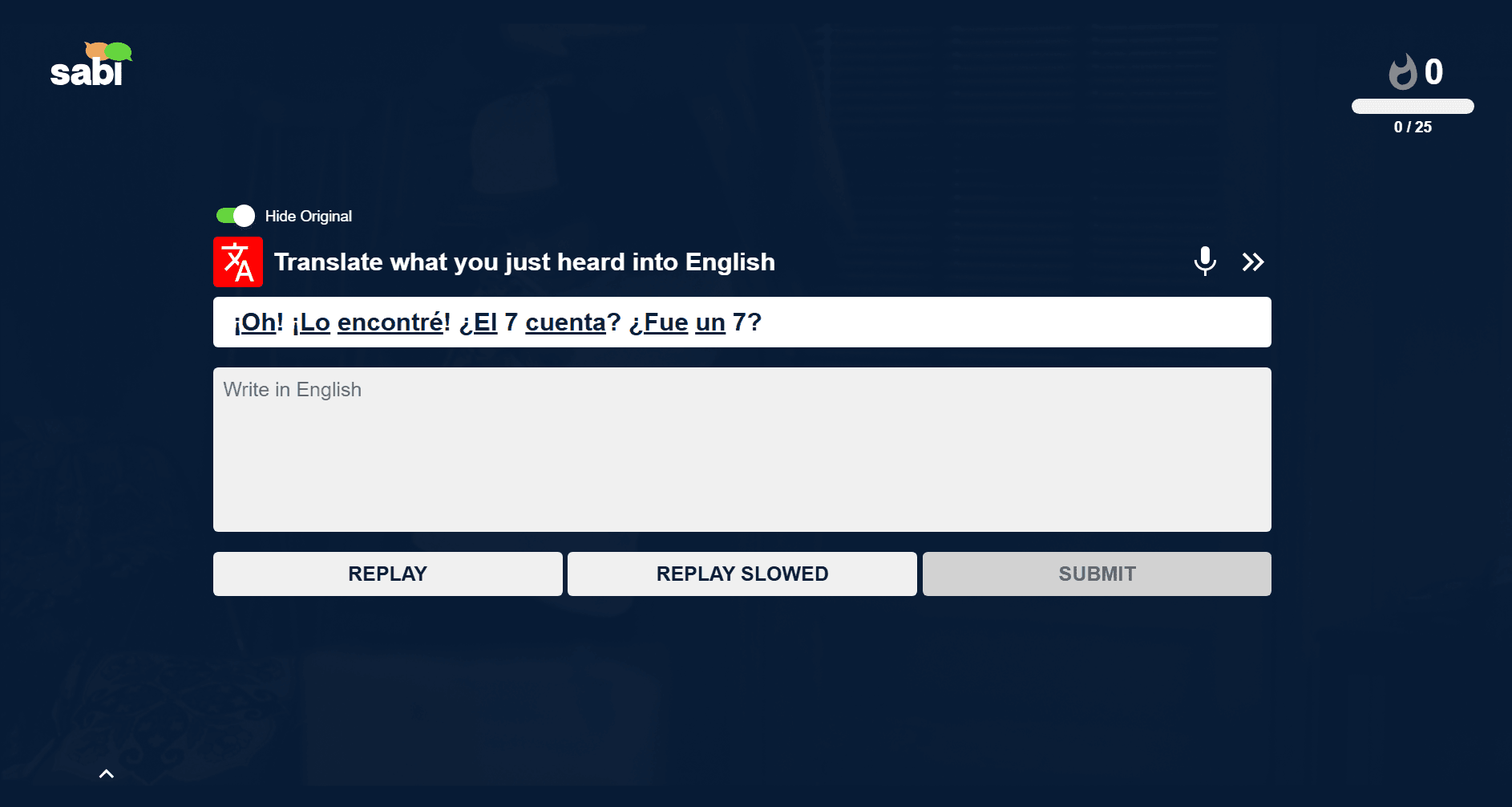
While watching, Sabi gives you interactive exercises that build on what you're hearing, like multiple choice and complete the translation. Each one feels like a small challenge with instant feedback, making learning that's rewarding and satisfying.
3. Auto-Pause for Practice
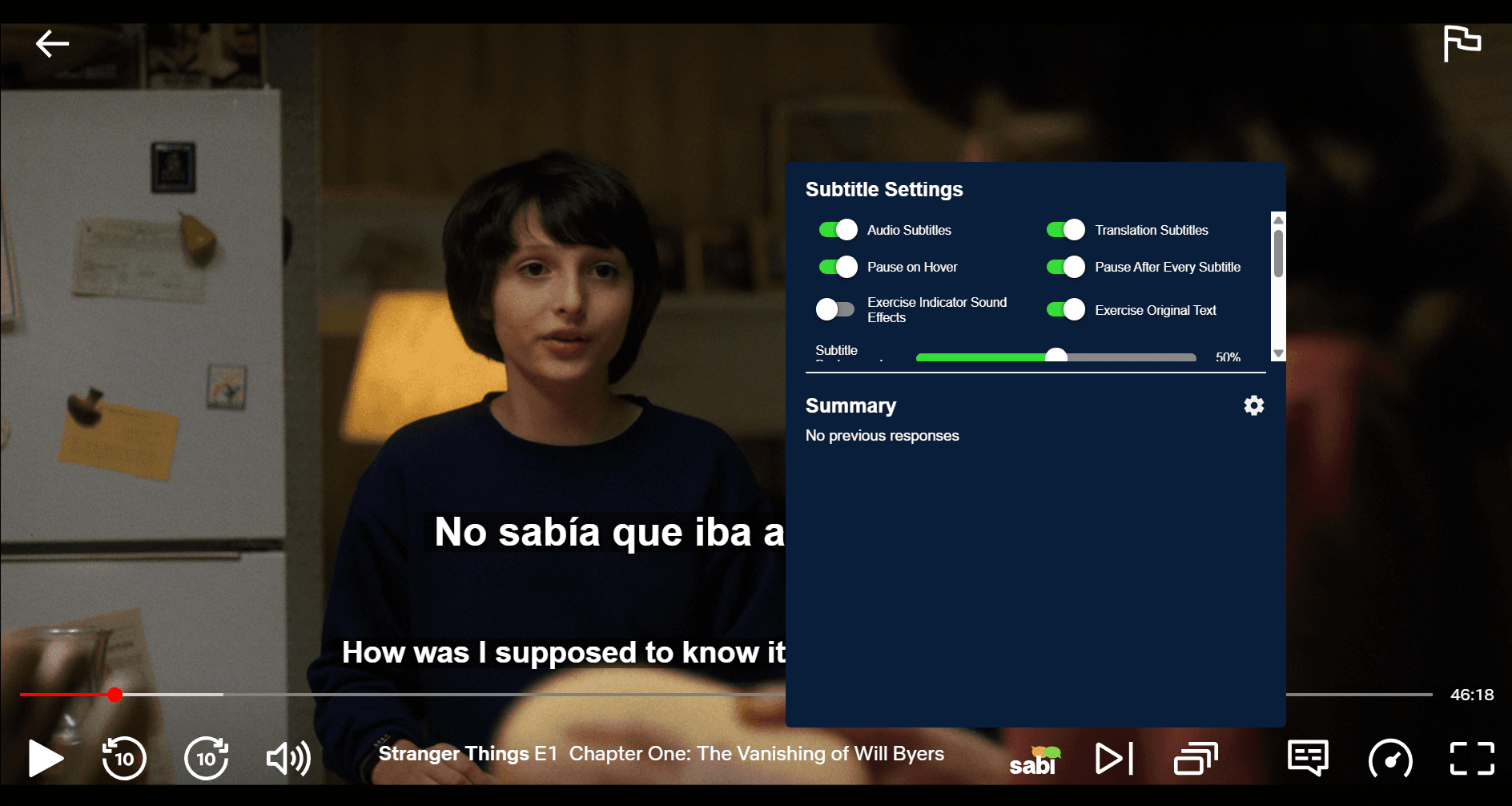
Sabi automatically pauses after each subtitle line, giving you the chance to repeat, shadow, or imitate what you hear. You can think of it like a rhythm game where you match the characters' speech and improve your pronunciation and confidence with each line.
4. AI Explain and Grammar Insights
Sabi's AI Explain feature breaks down the grammar and linguistic structure behind what you see, helping you understand why something is said the way it is. This turns watching into an active learning game where each line deepens your understanding.
5. Achievements and Progress Tracking
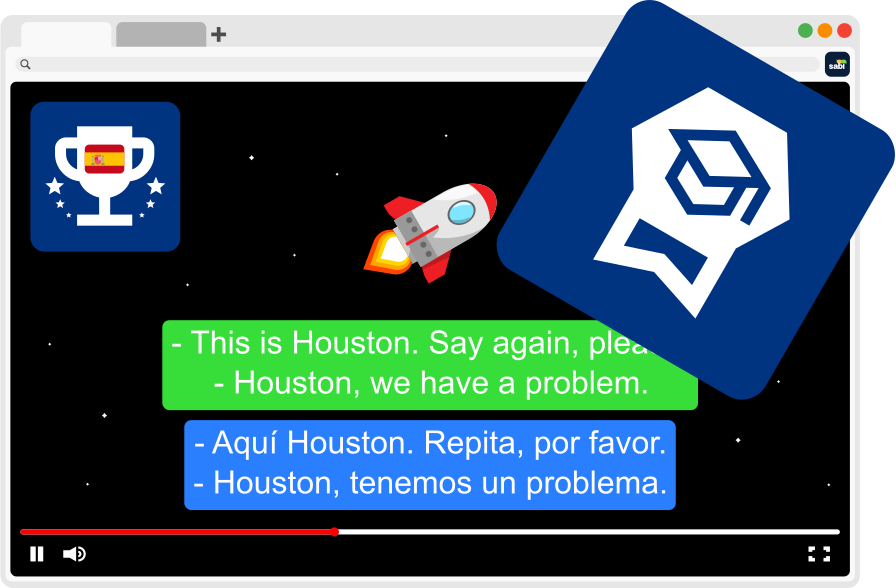
Every time you watch, practice, or review, you earn achievements and milestones, similar to how video games reward you for completing objectives. Seeing your stats and badges grow provides that extra motivation to keep going.
Conclusion
Language learning fails when it feels like work, and succeeds when it feels like play. Whether you choose to manually track your streaks on a calendar, download a dedicated gamified app like Duolingo, or use tools like Sabi to gamify your Netflix time, the goal is the same: to trick your brain into wanting to study.
— Use an App for your morning commute to keep your streak alive.
— Use Netflix in the evening to immerse yourself in the culture.
— Use a Manual Goal to reward yourself at the end of the month.
The best game is the one you keep playing. So pick your strategy, set your first quest, and press start.