What to Do After Duolingo
💡 Quick answer: After Duolingo, the biggest gap is usually understanding real people at normal speed. Here's what to do next:
1. Check your real level with a video made for native speakers.
2. Train your listening with real shows.
3. Start reading real content.
4. Practice speaking every week.
5. Keep reviewing what you learn.
❓ Can Duolingo Make You Fluent?
Not on its own, but that doesn't mean it was a waste of time. Duolingo is good at building a daily habit and teaching the basics.
Duolingo says nine of its courses now teach through B2, an upper-intermediate level. That's what the courses cover, though, not a guarantee of what you can do when you finish.
Speaking is a good example. When Duolingo tested learners at the end of its A2 sections, 66% of Spanish learners and 53% of French learners scored A2 or higher in speaking.
Apps also control what you hear. Real people talk faster, use slang and don't wait for you to tap an answer, so it's normal to feel lost the first time you watch a show.
🧭 Step 1: Check Your Real Level
Your Duolingo score won't tell you much about how you'd cope in real life. Instead, pick a 5-minute video made for native speakers, such as a scene from a show or a YouTube clip, and watch it without subtitles.
What you understood | Where to start |
|---|---|
Almost nothing | Easy videos, dual subtitles |
Some words | Shows with dual subtitles |
Most of the story | Target-language subtitles |
Nearly everything | No subtitles, plus speaking |
Don't worry if the result is lower than you expected. Listening is often harder than a course makes it seem. For a sense of how big that gap is, here's how many words you need to understand TV.
📺 Step 2: Train Your Listening With Real Shows
This is the biggest change you can make. Real shows give you natural speech, and they're much easier to stick with than another course because you're watching for the story. For more on this, see our guide to learning a language with subtitles.
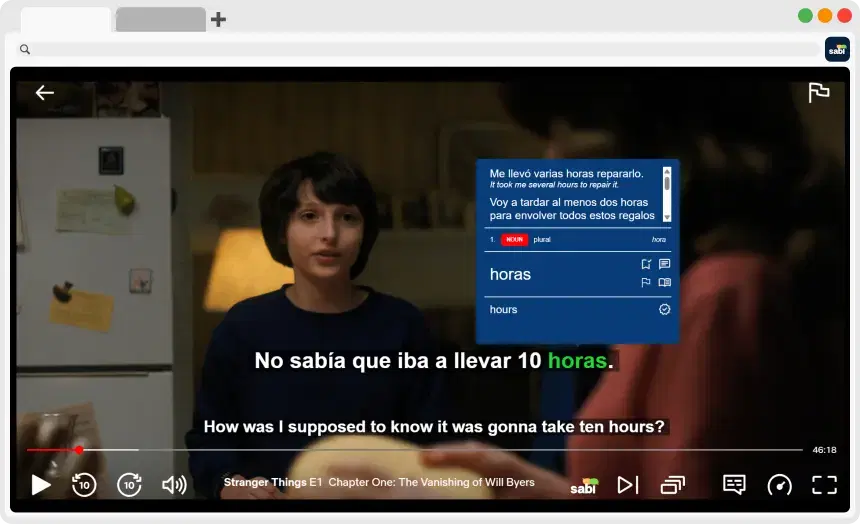
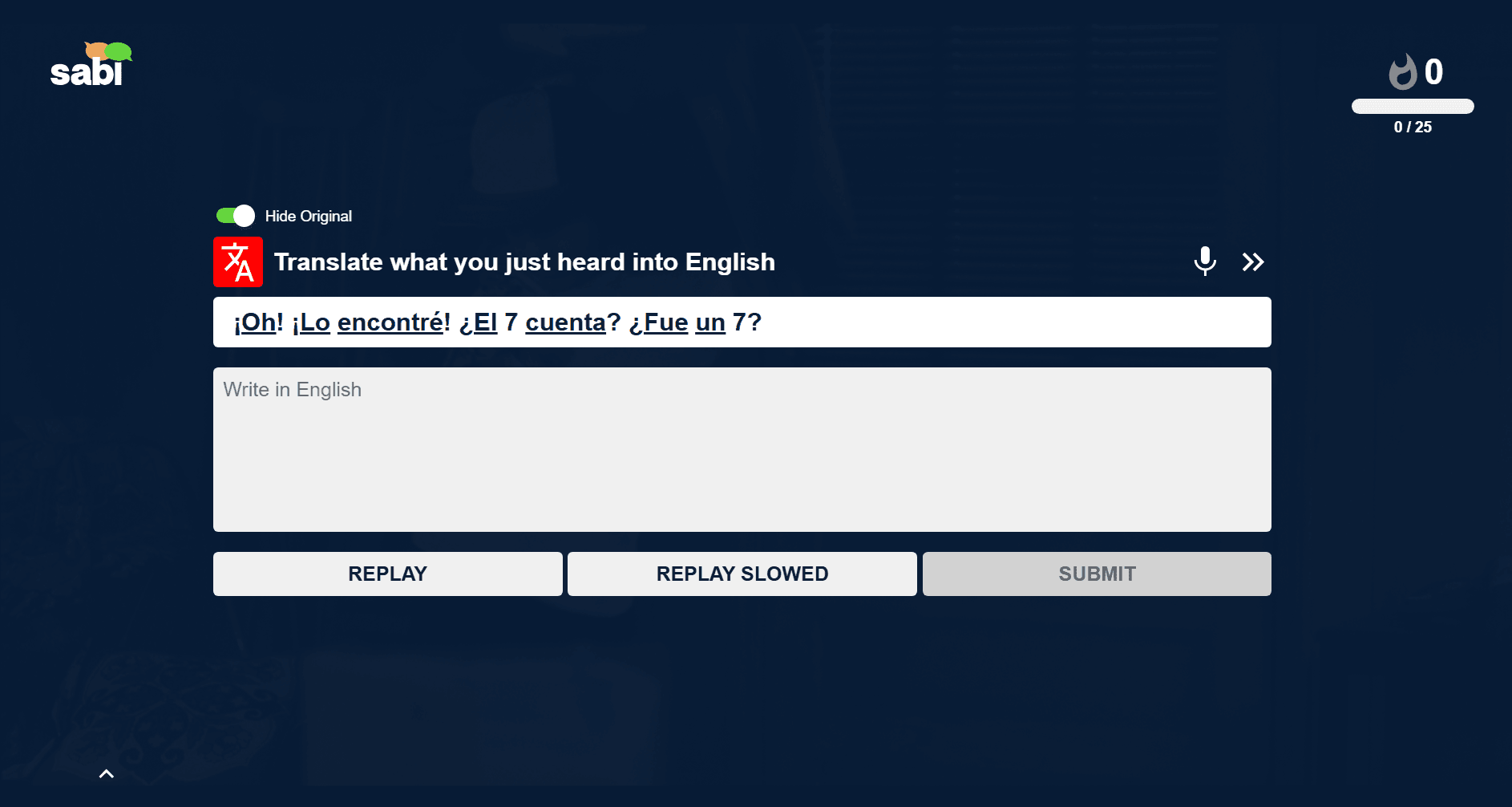
The catch is that shows don't stop to help you. Sabi is a browser extension that adds this support on Netflix, YouTube, Disney+, Prime Video and Rakuten Viki, so the jump from an app feels smaller:
— Dual subtitles show your target language and your own language together.
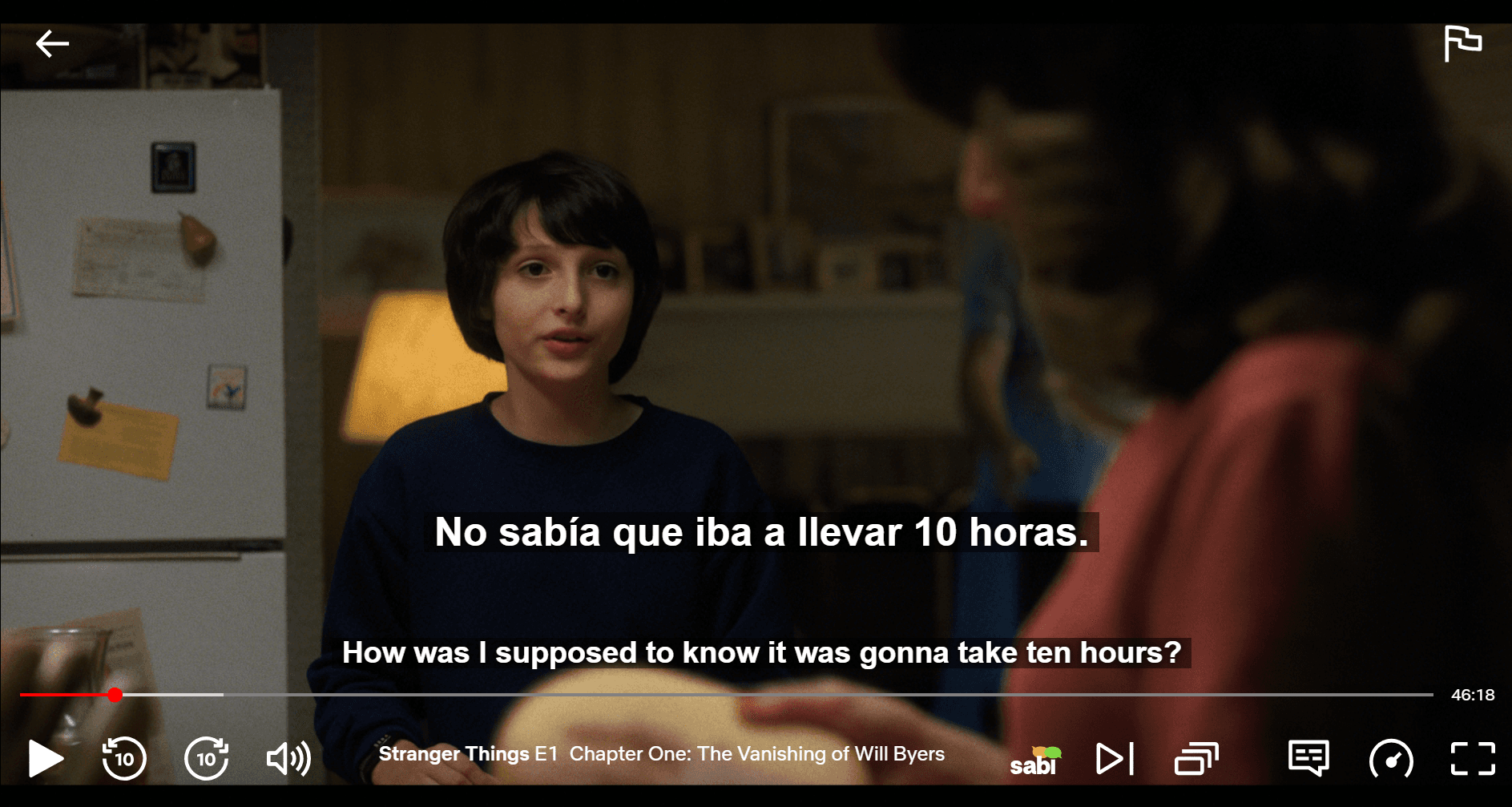
— Hover translations show the meaning, grammar and example sentences for any word.
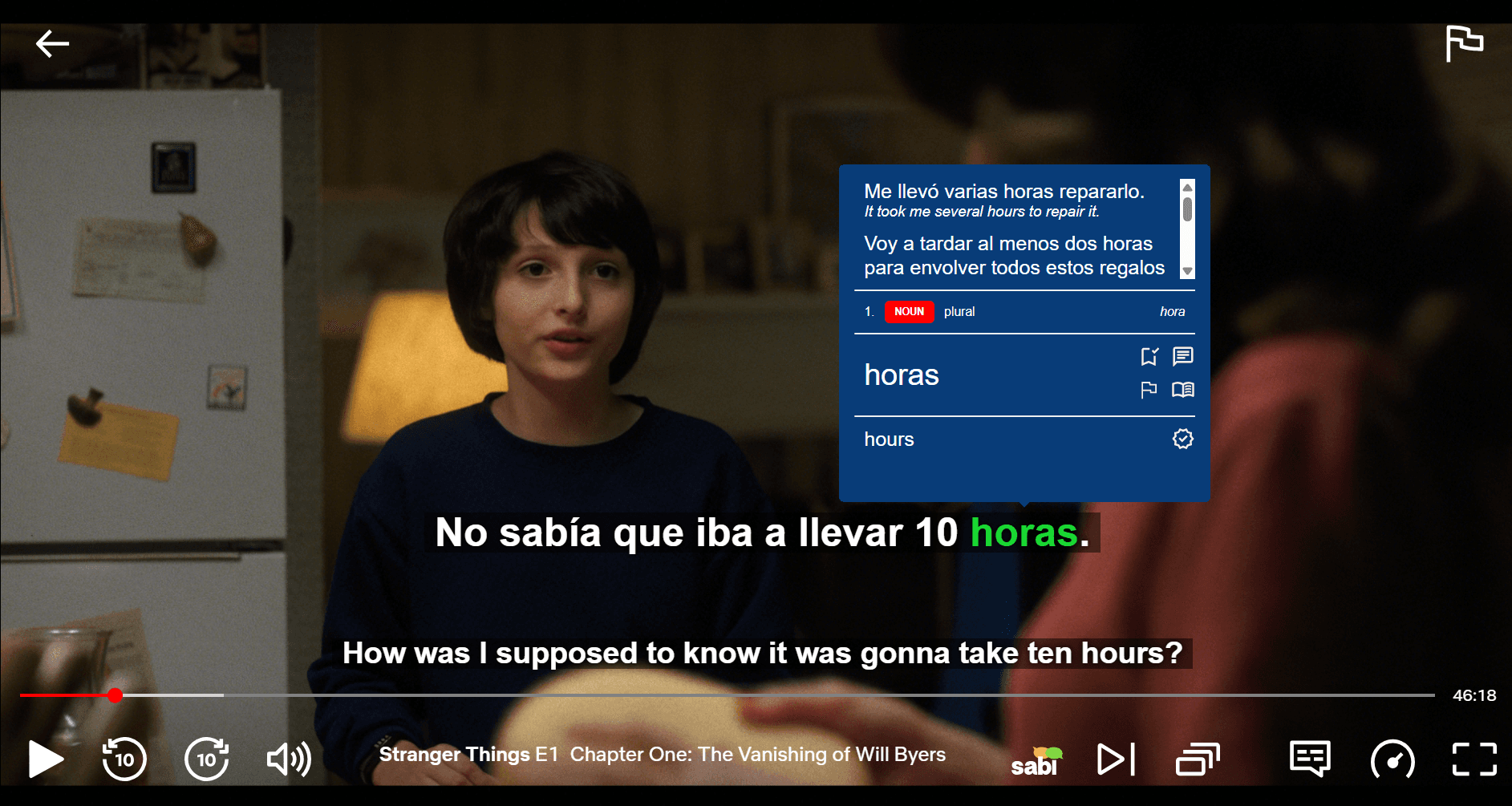
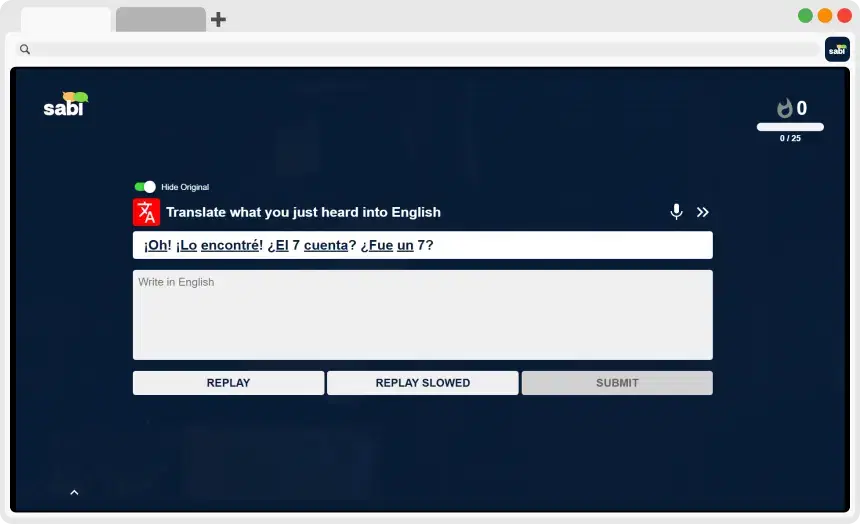
— Exercises while you watch test you on what you just heard, which will feel familiar after Duolingo.
📖 Step 3: Start Reading Real Content
Reading is a great way to build vocabulary because you see lots of words in a short time. Start with something short that you already care about: news on a topic you know, graded readers or simple blogs.
You don't need to look up every word. If you can follow the main idea, keep going, and only check the words you see again and again.
🗣️ Step 4: Practice Speaking Every Week
Tapping answers doesn't train you to come up with sentences yourself. To speak better, you have to speak:
— Book a tutor or find a language exchange partner: Even one conversation a week makes a big difference.
— Practice with AI: If you're not ready to talk to a person, try using ChatGPT as a language tutor.
— Repeat lines from shows: Copy the rhythm and pronunciation of a scene you just watched. This is called shadowing.
🔁 Step 5: Keep Reviewing What You Learn
You'll forget new words if you never see them again. The good news is that real content does some of the work for you, because common words keep coming back. For the rest, save the ones you want to remember and review them for a few minutes a day. See why words stick better in context.
🗓️ A Simple Weekly Plan
You don't need much time. Here's what 30 minutes a day could look like, including a few minutes of review:
Day | What to do |
|---|---|
Monday, Tuesday | Watch and study a show |
Wednesday | Read something short |
Thursday | Practice speaking |
Friday, Saturday | Watch and study a show |
Sunday | Review your new words |
Want to go further? See how to immerse yourself in a language at home.
🌍 What to Do After Duolingo for Your Language
The steps are the same for every language, but here's where to find something to watch in yours:
— Spanish: Learn Spanish with shows and the best movies and shows for Spanish
— French: Learn French with shows and the best movies and shows for French
— German: Learn German with shows
— Japanese: Learn Japanese with shows and the best anime on Netflix for learning Japanese
— Korean: Learn Korean with shows and the best K-dramas on Netflix for learning Korean
— English: How to learn English with Netflix
❓ Frequently Asked Questions
Should I stop using Duolingo?
Not necessarily. If it keeps you practicing every day, stick with a short session as a warm-up. Just don't let it replace listening, reading and speaking.
What level will I be after finishing Duolingo?
It depends on the course and how you used it. Duolingo says nine of its courses teach through B2, but finishing a course doesn't guarantee that level, especially for listening and speaking. A formal test is the most reliable way to find out.
Can I become fluent with Duolingo alone?
Not on its own. Duolingo is good for the basics, but fluency also takes a lot of real listening, reading and speaking.
Why can't I understand native speakers after Duolingo?
Real speech is faster than app audio, and it's full of slang and shortened words. Listening to native content regularly is the best way to get used to it.
What's the best thing to do after Duolingo?
For most learners, it's watching real shows with subtitles, because listening is usually the biggest gap. Add reading and speaking practice as you improve.