Best LingQ Alternative: Sabi
Last Updated:
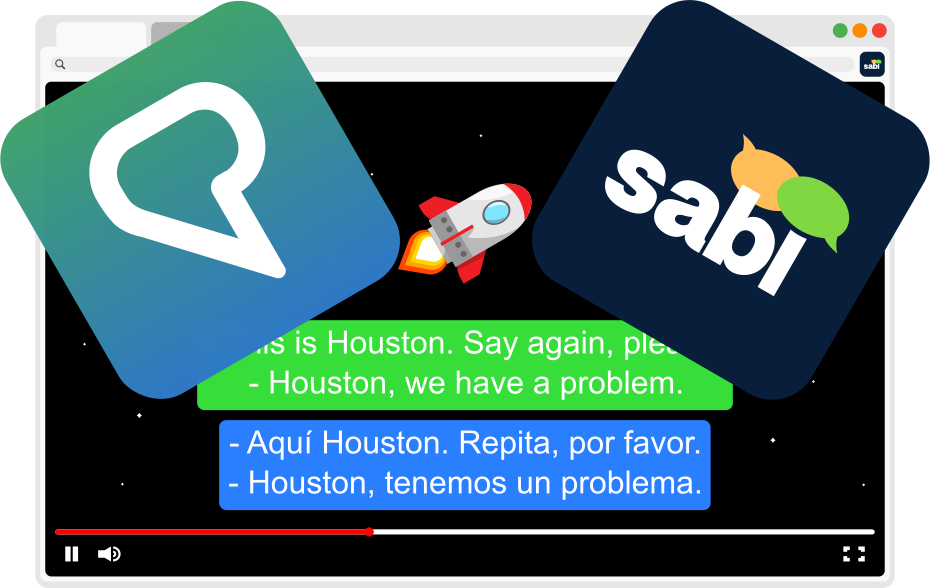
Immersion tools help learners absorb a new language by interacting with real content, from videos and podcasts to articles and shows. Two popular options in this space are LingQ and Sabi, but they take very different approaches.
In this article, we’ll compare them across major areas like platform support, learning experience, design & UI, and pricing so you can decide which best fits your language goals.
Short on time? Here's a quick look at how they compare.
🆚 Quick Comparison: Sabi vs LingQ
Feature | Sabi | LingQ |
|---|---|---|
Netflix | ✅ | ❌ |
YouTube | ✅ | ✅ |
Disney+ | ✅ | ❌ |
Prime Video | ✅ | ❌ |
Rakuten Viki | ✅ | ❌ |
Dual Subtitles | ✅ | ✅ |
Word Translations | ✅ | ✅ |
In-Video Exercises | ✅ | ❌ |
Monthly Price | Free Trial / €1,84 | €10,00 |
🧠 Overview: What Each Tool Is
LingQ
LingQ is a language learning platform focused on reading and listening comprehension with authentic content. It supports over 40 languages and allows learners to import their own materials, track vocabulary, and practice through an integrated system of lessons and reviews.
Sabi
Sabi is a Chrome extension that enhances widely used streaming platforms like Netflix, Disney+, Prime Video, YouTube, and Rakuten Viki by adding interactive language learning features. It turns the shows and videos you already watch into lessons with dual subtitles, hover-to‐translate tools, and built-in exercises (multiple choice, complete the translation).
📺 Platform Support
LingQ
— Web application on desktop browsers
— Mobile apps for iOS and Android with offline capability
— Users can import content like PDFs, eBooks, podcasts, and YouTube links for personalized learning units
🎯 Key Point:
— LingQ is a standalone learning environment and isn’t tied to external streaming subscriptions as you access content within the app itself
Sabi
— Works as a Chrome extension that enhances videos you already watch on existing streaming services
— Supports Netflix, Disney+, Prime Video, YouTube, and Rakuten Viki
— Uses your existing subscriptions rather than a proprietary content library
🎯 Key Point:
— Sabi does not provide its own media; instead, it leverages your streaming subscriptions to turn that content into learning opportunities
📚 Learning Experience
LingQ
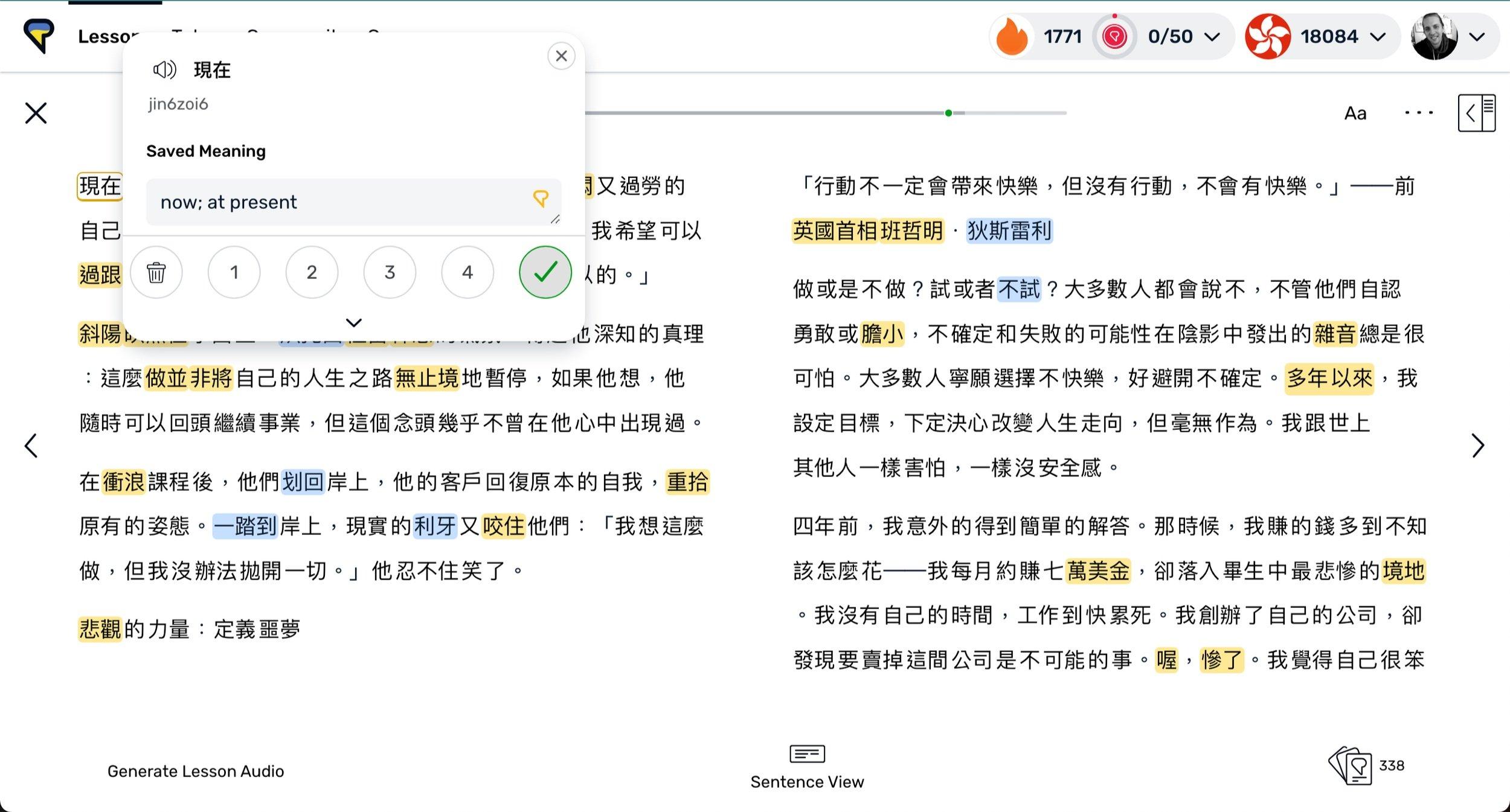
LingQ emphasizes authentic input and comprehension:
— Learners encounter real content such as articles, podcasts, and imported media
— Vocabulary is tracked through a system called “LingQs” that moves words through stages of familiarity
— Spaced repetition and analytics help reinforce long-term retention
🧠 Learning Style:
— LingQ’s approach focuses on comprehensible input and building fluency over time through exposure and review
Sabi
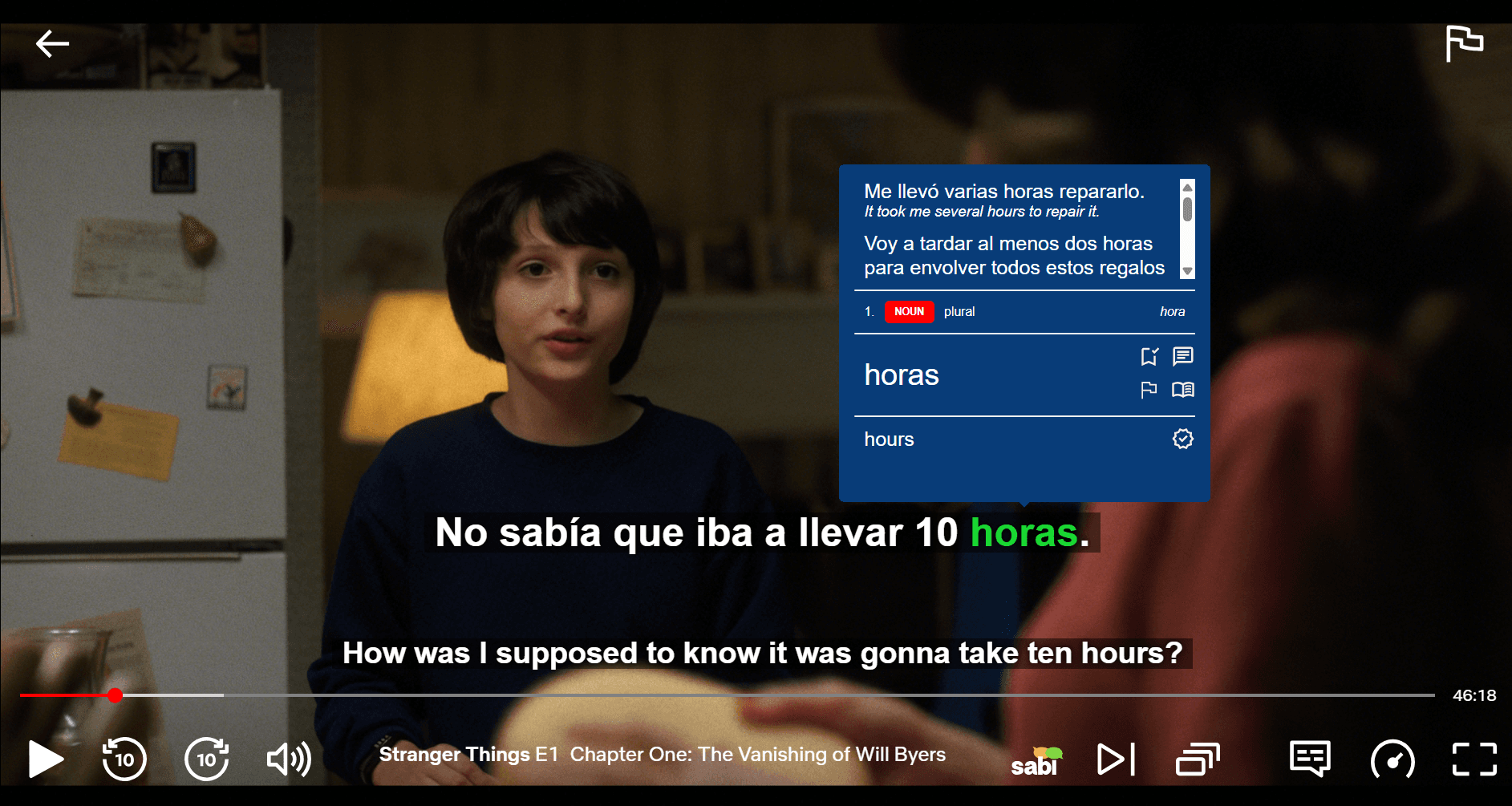
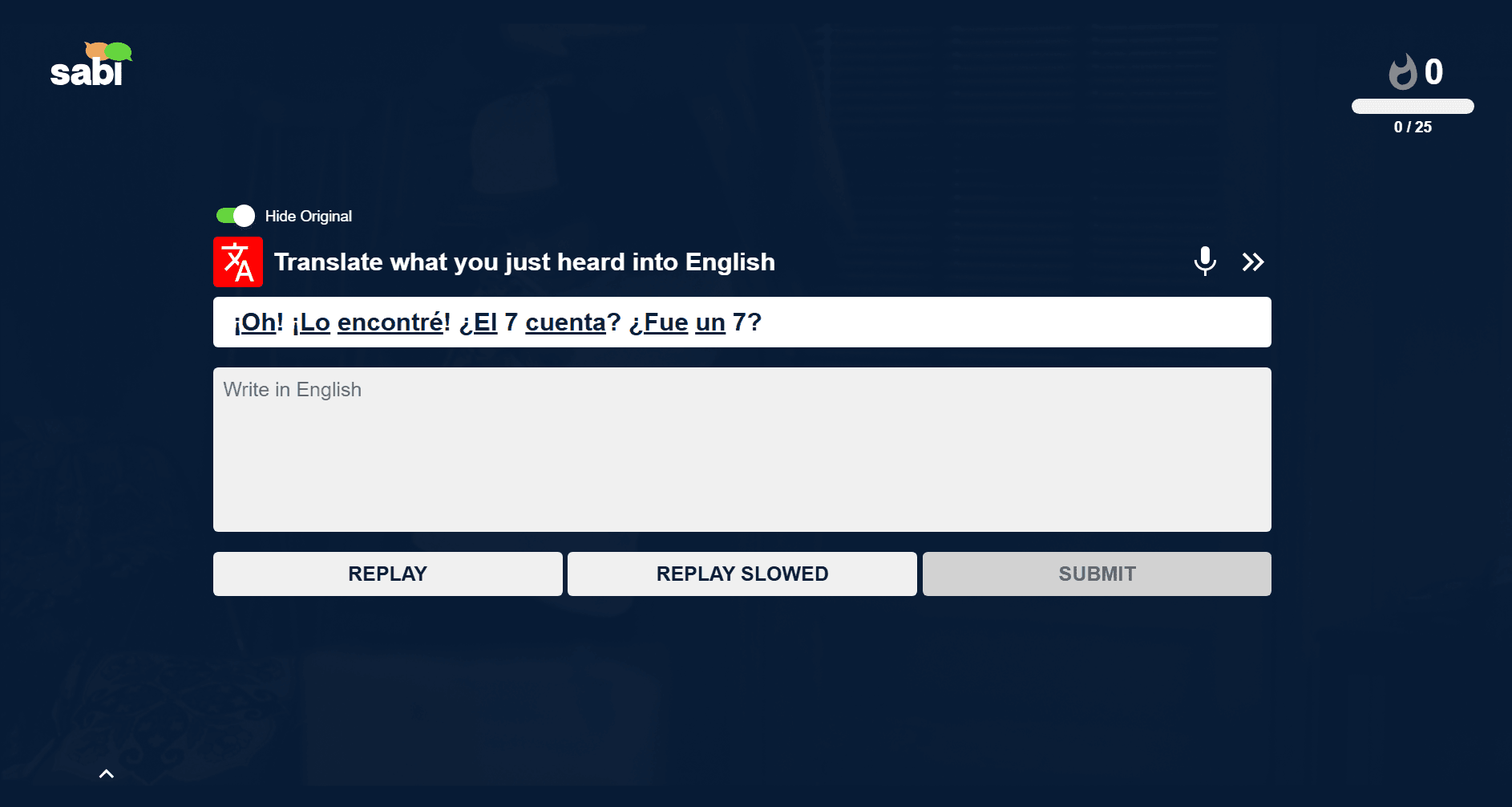
Sabi’s experience focuses on active, video-based learning:
— Dual subtitles to show the target and native language
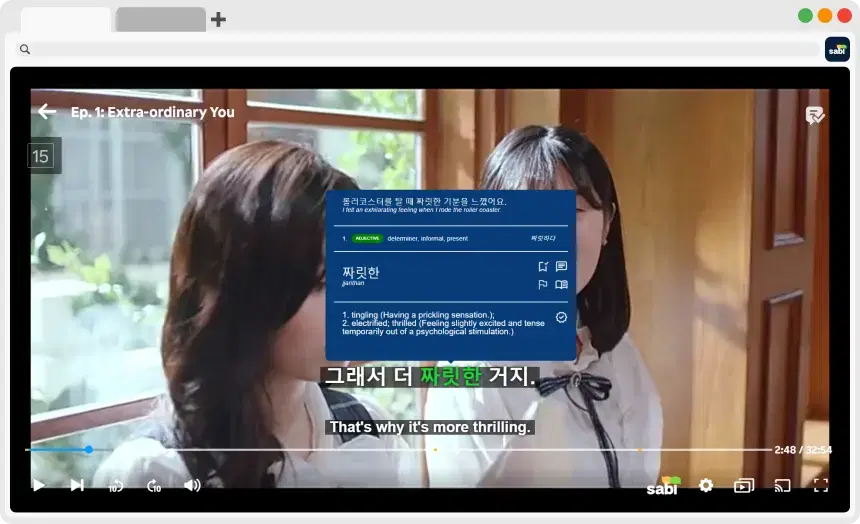
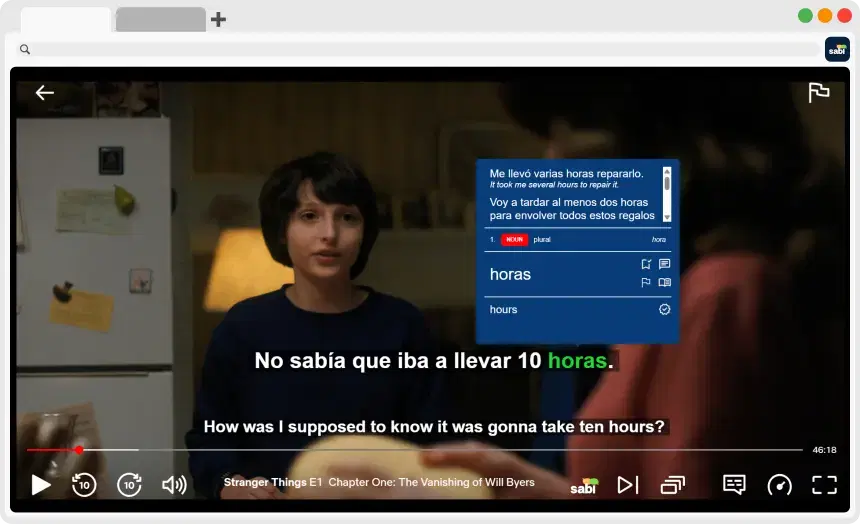
— Hover over any word for its translation, grammar information, and usage
— AI-generated (Whisper) subtitles for better transcript accuracy
— Auto-pause for repetition and active listening
— Interactive exercises that pop up during watching (e.g. fill-in-the-blank, multiple choice), also available after sessions for review
— AI Explain to break down grammar and usage
🧠 Learning Style:
— Sabi turns passive watching into a structured learning session, blending exposure with practice
🎨 Design & UI
LingQ
— Provides a content-heavy learning interface with panels for vocabulary, lessons, and progress tracking
— Offers customizable reading and listening modes, with audio-text synchronization
✅ Pros:
— Powerful features
❌ Cons:
— Some users find the interface overwhelming or clunky, especially when navigating between modes and features
Sabi
— Offers a clean, modern overlay that integrates directly onto streaming platforms
— Learning tools appear over the video you're already watching
— Designed to feel like a companion rather than a separate classroom, making immersion feel more natural and less intrusive
✅ Pros:
— Keeps you in the streaming UI you already use
— Learning tools are embedded alongside content
❌ Cons:
— Chrome extension only
— Not yet a mobile app (learning occurs via desktop browser)
💸 Pricing
LingQ
— Free tier with very limited access to content and features
— Premium tier with unlimited vocabulary and content importing
— Cheapest monthly price at €10,00
💡 Important:
— It provides a broad set of tools but has a high monthly cost
Sabi
— Offers a free trial with complete access to all features, no payment information required
— Paid subscription to continue access
— Requires your own existing streaming subscriptions (Netflix, Disney+, etc.) for content
— Cheapest monthly price at €1,84
💡 Important:
— Lower price point focused on interactive video learning
✅ Pros & Cons
LingQ
✅ Pros:
— Supports 40+ languages with extensive content and import capabilities
— Multi-device support with offline modes
— Vocabulary tracking and spaced repetition system
❌ Cons:
— Can feel cluttered or complex to navigate
— High monthly cost
— Some users report glitches or usability frustrations
Sabi
✅ Pros:
— Works with your existing streaming services
— Broad access to unlimited content you already watch
— Interactive tools for active learning (hover lookup, practice exercises, AI Explain)
— Free trial available with no payment info required
❌ Cons:
— Only available via Chrome desktop
— Depends on your own streaming subscriptions
— Lacks native mobile app
🏁 Final Thoughts
Choose LingQ if you want a comprehensive language learning ecosystem with reading, listening, vocabulary tracking, and personalized content import that you can use on multiple devices.
Choose Sabi if your goal is fun, immersive video-based learning that fits naturally into your entertainment routine. Sabi’s interactive features and lower cost make it a great option for learners who want to learn a language while watching shows and videos they already enjoy.