How to Get Dual Subtitles on Disney+
Last Updated:
❓ Does Language Reactor Work on Disney+?
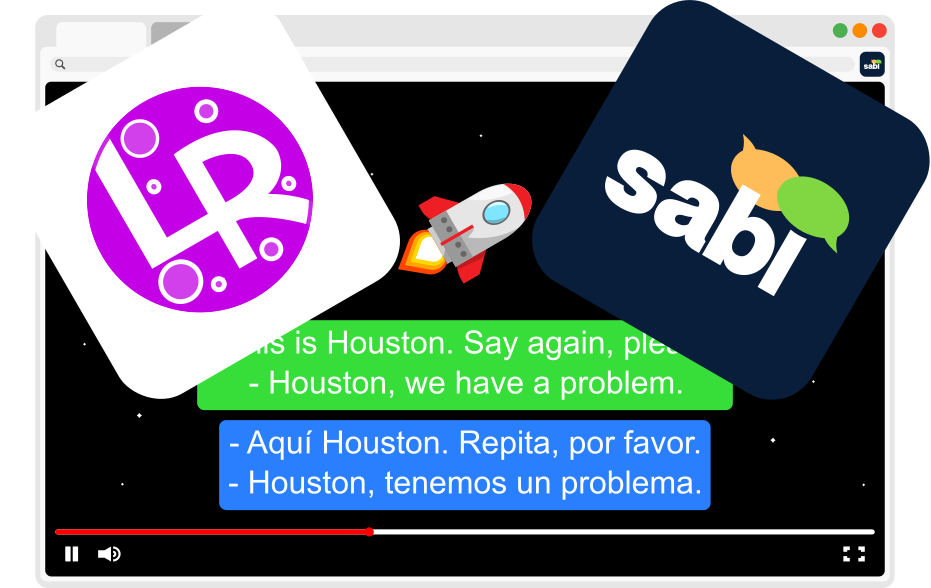
Language Reactor does not support Disney+, as it only works with Netflix and YouTube (see which platforms Language Reactor supports). If you're looking for a Language Reactor alternative for Disney+ with features like dual subtitles, instant word translations, and interactive exercises while watching on Disney+, you should use tools like Sabi that are directly integrated into the Disney+ video player.
❓ How do I make Disney+ subtitles exactly match the dubbed audio?
If you're watching a dubbed show, you'll often notice the subtitles don't match what the voice actors are saying. This is because standard subtitles are direct translations, while dubbing scripts are rewritten to match the actors' lip movements. This mismatch can make learning and shadowing very difficult. To fix this, you can use Sabi to generate AI subtitles based on the actual audio track, making your viewing experience smoother and more useful.
📺 How to Learn a Language with Disney+ and Sabi
Sabi is a Chrome extension that turns passive watching into active learning. Once installed, it turns Disney+ into an immersive, interactive language learning experience.
How to start learning with Sabi on Disney+:
1. Install the Sabi Chrome Extension: Sabi integrates seamlessly with Disney+. Once it's installed, you'll see the Sabi screen while you watch.
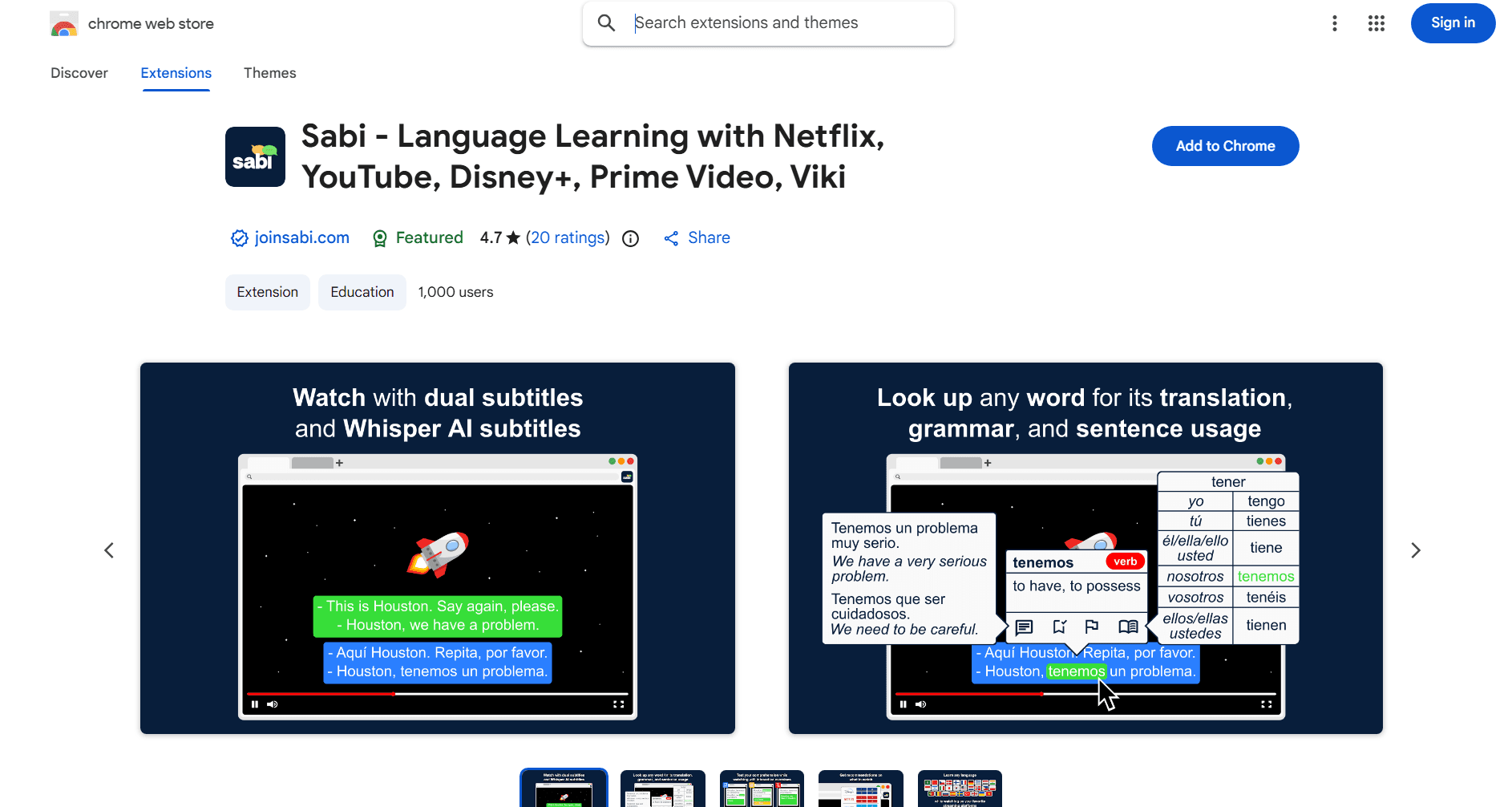
2. Dual Subtitles: Watch with both your target language and native language subtitles side-by-side for context and clarity (what are dual subtitles?). 👉 Try it for free
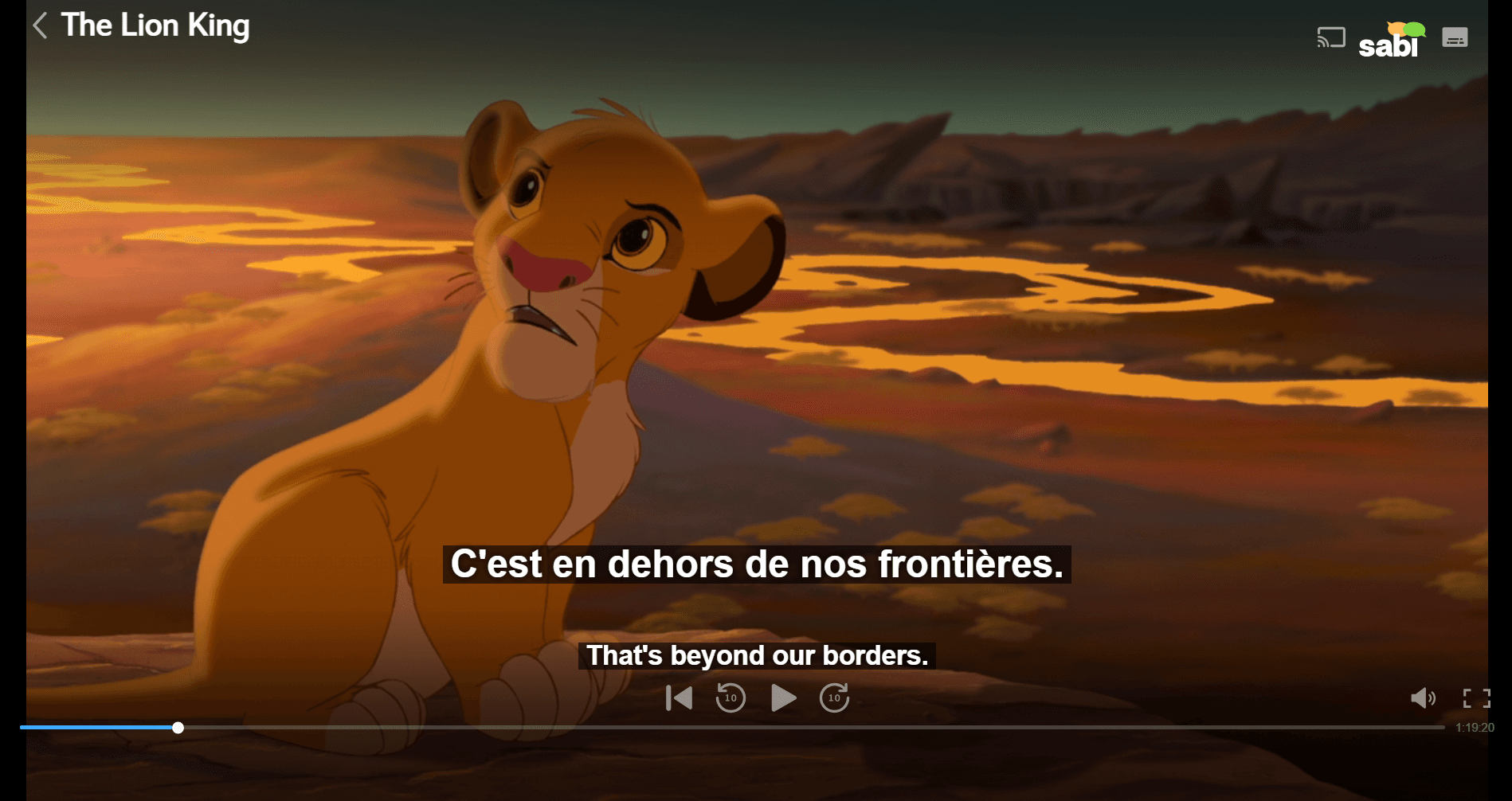
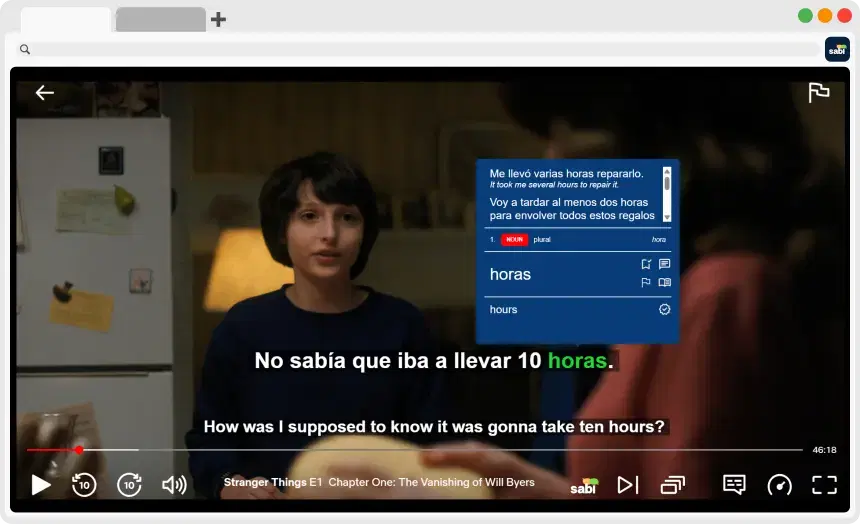
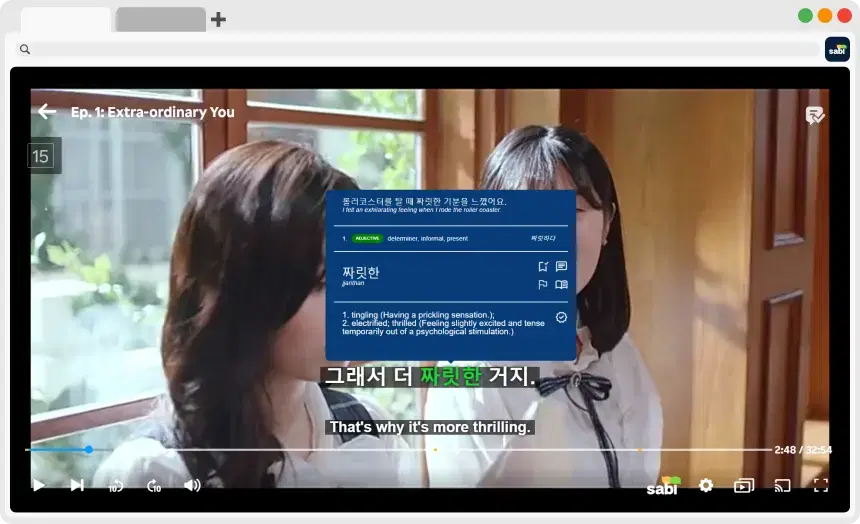
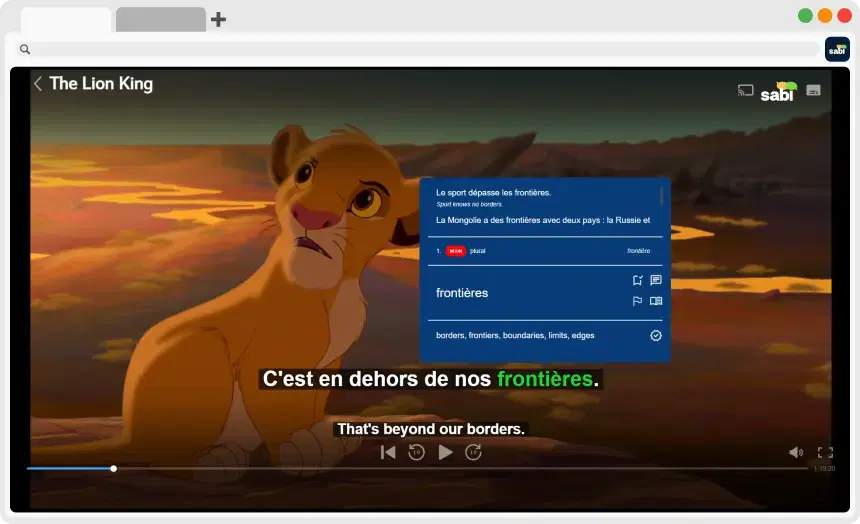
3. Hover Translations: Hover over any word to see translations, grammar info, and example sentences.
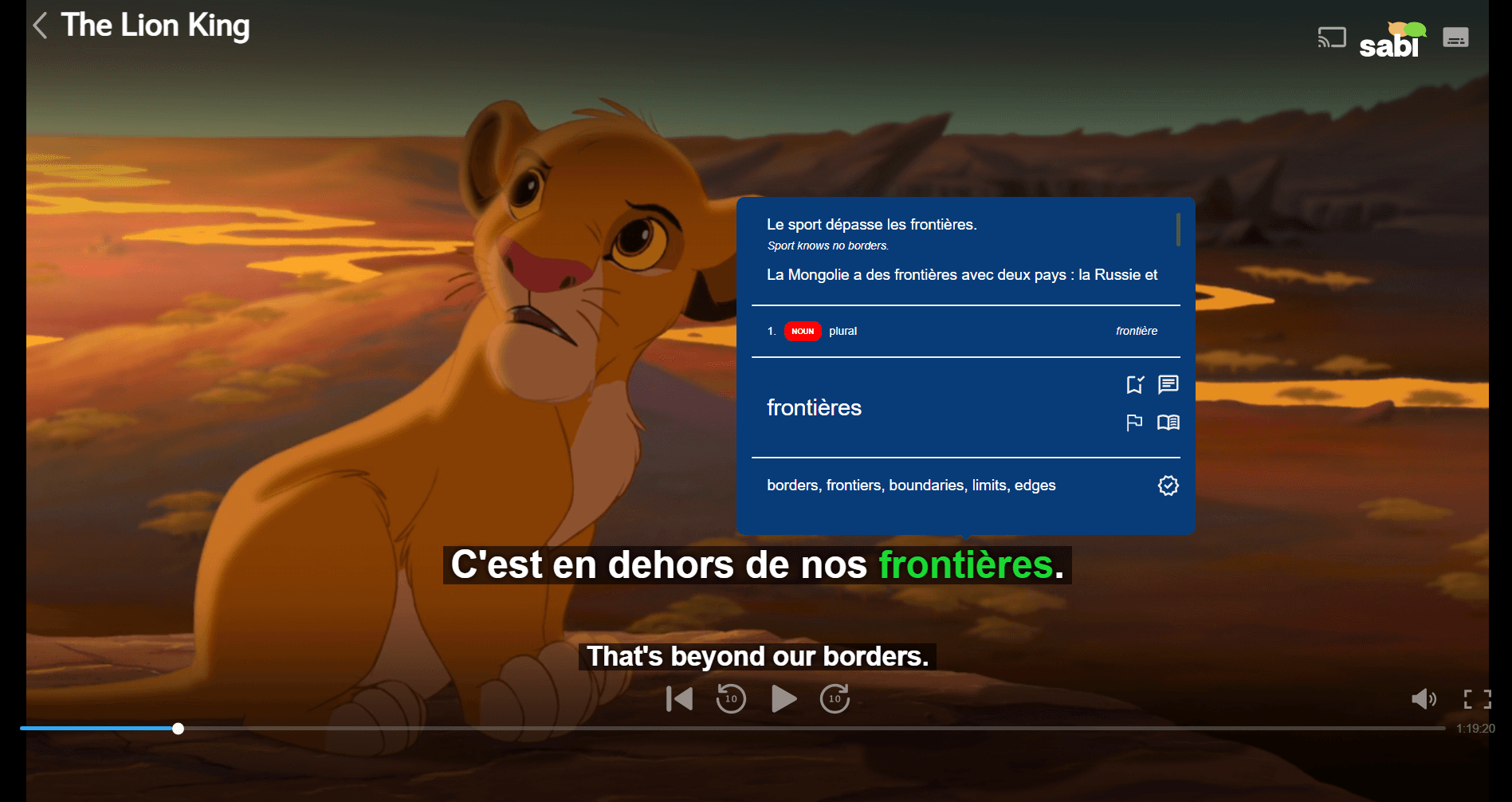
4. Auto-Pause & Repeat: Sabi can automatically pause after each subtitle line, letting you review what you just heard before moving on.
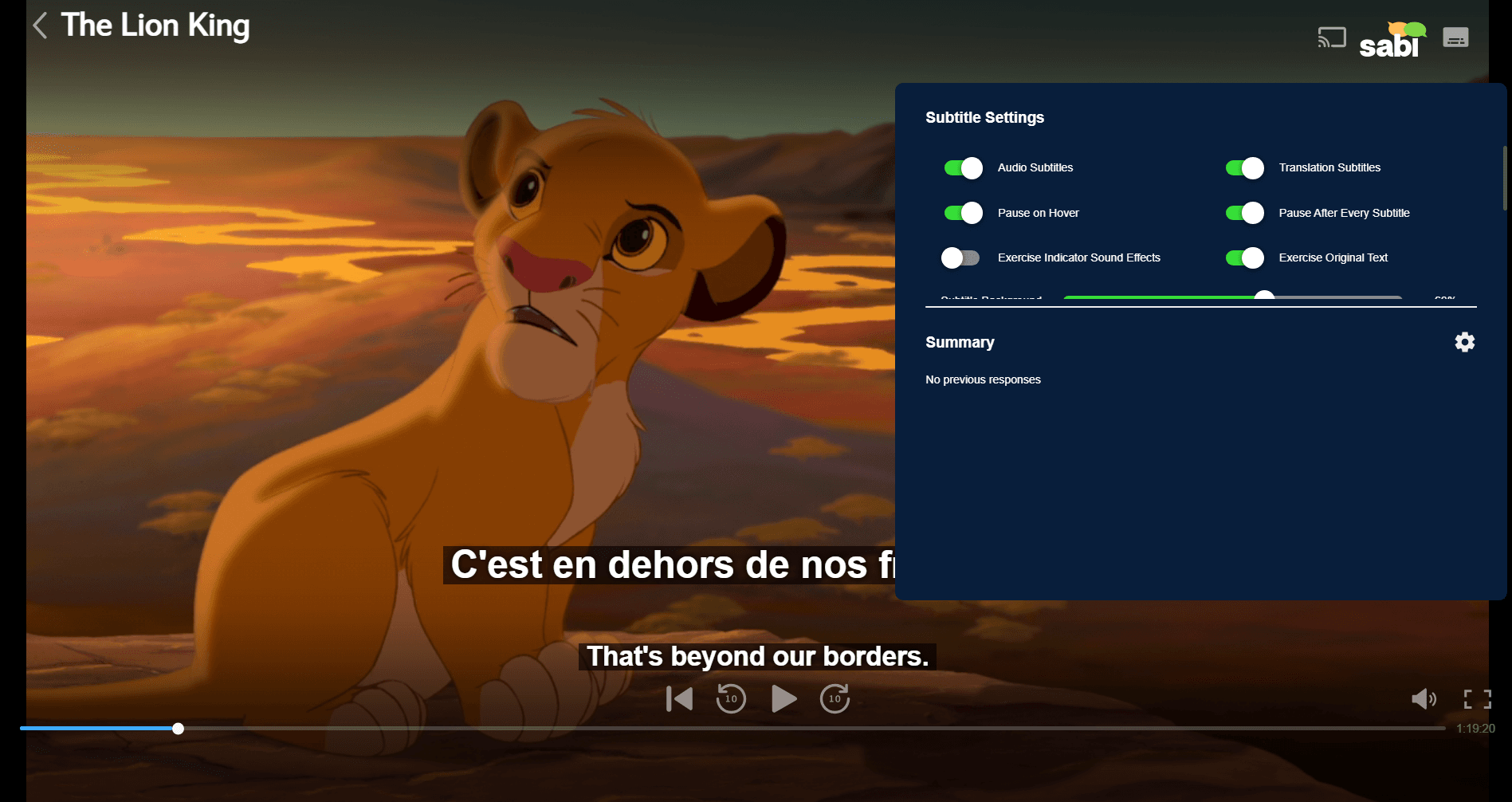
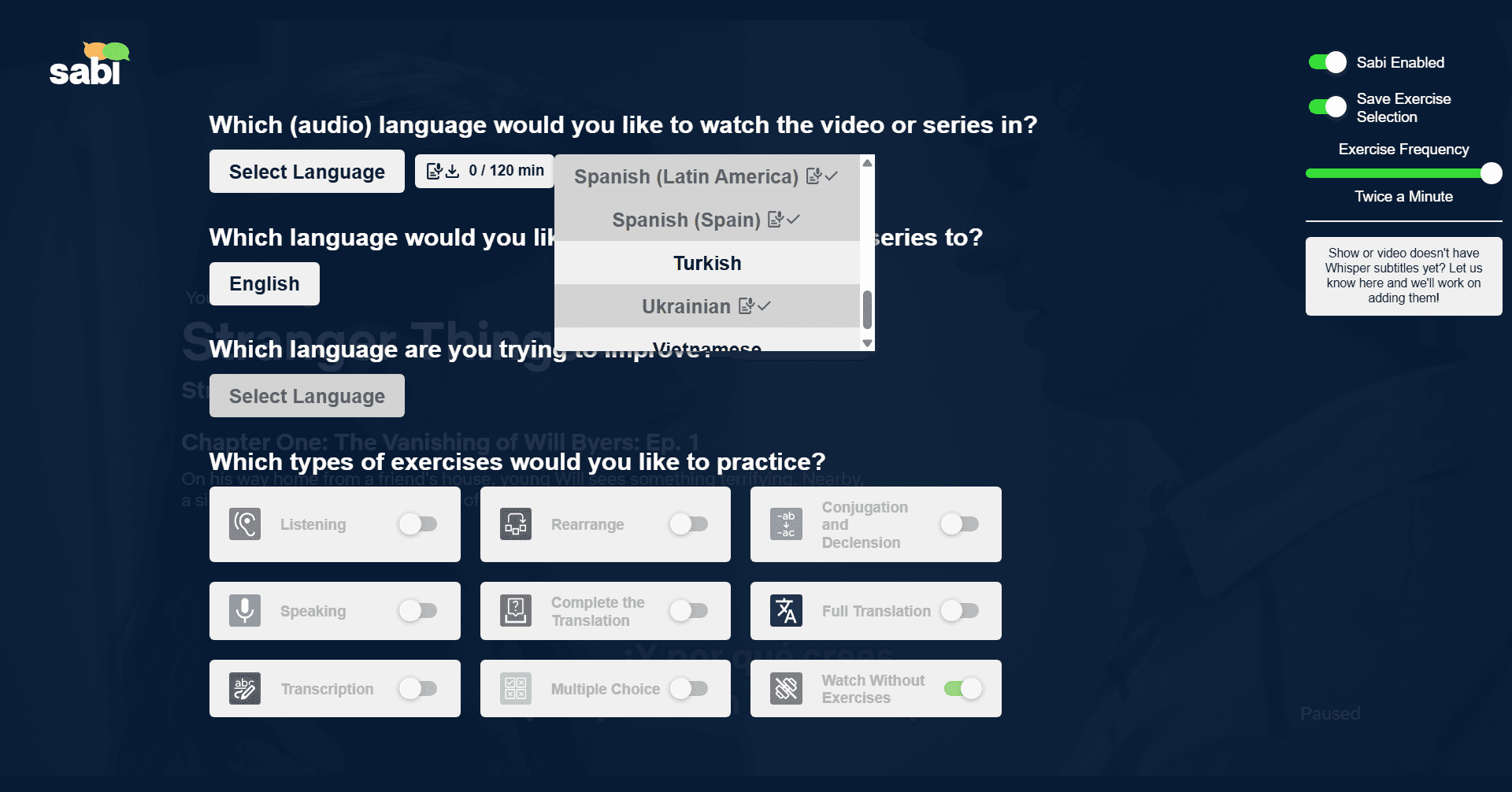
5. Interactive Exercises: Practice with listening, speaking, and vocabulary exercises while you're watching.
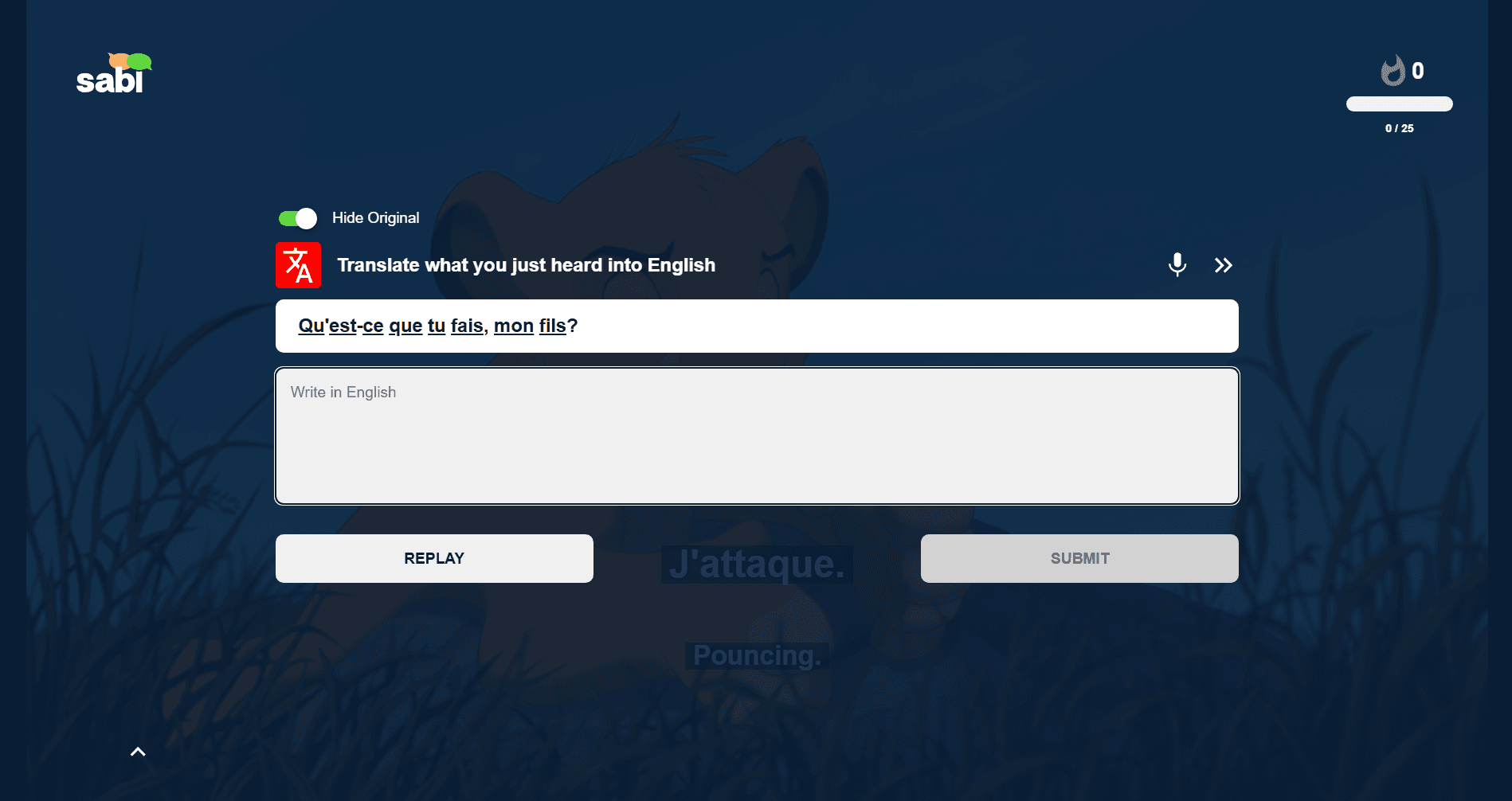
6. Whisper AI Subtitles: For videos without subtitles, Sabi can auto-generate accurate captions to make sure you can still follow along.
💡 Tips for Learning with Disney+
— Pick Content You Already Know: Start with a Disney classic you've seen before. Watching "The Lion King" or "Frozen" in your target language gives you context, making it easier to understand what's being said.
— Use the Target Language for Audio and Subtitles: Disney+ often offers audio and subtitle options in multiple languages. Start with both in your target language to maximize immersion.
— Watch in Chunks: Break the episode or movie into 5-10 minute segments. Focus on comprehension and listening before moving on.
— Shadow Dialogues: Pause and repeat lines out loud, mirroring tone and pacing. This is especially helpful in languages like Japanese, Korean, and French.
— Compare browser tools: Disney+ is just one platform. See how Sabi stacks up against other options in our guide to the best language learning Chrome extensions, or turn study into a game with a gamified language app.
🎯 Why Disney+ Works for Language Learning
Disney content is ideal for language learners for a few reasons:
— Familiar plots make it easier to follow the dialogue, even if you don't understand every word.
— Clear, clean audio helps you pick up pronunciation and intonation more easily than in fast-paced adult dramas.
— Multiple audio and subtitle options let you watch in your target language with or without translation support.
— Repetitive and simple vocabulary in many family shows and animated films makes them ideal for beginners.
🎬 Our Top Content Recommendations
For Learning Japanese 🇯🇵 : Start with Anime and Dramas
Anime is ideal for learners because voice actors usually speak clearly and use standard grammar. However, TV dramas and movies are also invaluable as they expose you to realistic conversations and polite vs. casual speech. Beginners should focus on modern slice-of-life content and avoid any historical or complex dramas.
👉 Check out the Best Movies and Shows on Disney+ for Learning Japanese
👉 Explore our full Japanese language learning guide
For Learning Korean 🇰🇷 : Dive into K-Dramas and Movies
K-dramas and films are excellent for learning natural, conversational speech and cultural honorifics. Beginners should look for modern rom-coms which use everyday vocabulary, while avoiding historical dramas (Sageuk) that use archaic language.
👉 Check out the Best Movies and Shows on Disney+ for Learning Korean
👉 Explore our full Korean language learning guide
For Learning Spanish 🇪🇸 : Learn with Shows and Movies
It's best to start watching shows and movies that get you used to natural pacing. Beginners should start with light comedies and family-friendly series, before moving on to fast-paced dramas or dialect-heavy content.
👉 Check out the Best Movies and Shows on Disney+ for Learning Spanish
👉 Explore our full Spanish language learning guide
❓ Frequently Asked Questions
Can you really learn a language just by watching Disney+?
Yes, but only if you combine watching with active techniques. Passive watching alone is slow, so be sure to actively engage with the content by looking up words you don't know and repeating aloud various phrases. Using tools like Sabi to add dual subtitles, instant translations, and exercises will dramatically accelerate your progress and make the whole experience more enjoyable.
How long should I watch per day?
Even 20 to 30 minutes daily is powerful if done consistently. It's more important that you're paying attention and engaging with the video, rather than trying to reach a certain amount of time.
🚀 Final Thoughts
Turning Disney+ into a language learning tool is not only effective but also fun. By pairing your favorite childhood classics or new releases with a learning-focused tool like Sabi, you transform passive entertainment into a powerful immersion strategy.